
Nigeria’s oil and gas resources alone will not secure the financing needed to develop them. Investors need confidence that agreed terms will endure, buyers will take the output and operators will deliver, NLNG has said, citing its Train 7 expansion as evidence of how these conditions can unlock capital for major energy projects.
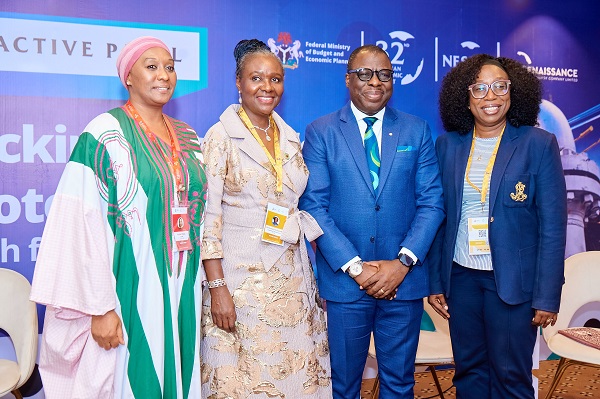
Speaking in Abuja at the 32nd Nigerian Economic Summit, NLNG’s Managing Director and Chief Executive Officer, Adeleye Falade, said the country’s challenge is not a lack of resources, but the ability to turn those resources into projects that lenders are willing to finance. He spoke during the interactive panel, “Unlocking Nigeria’s Oil Potential: The Push for More Oil.”
“Certainty itself is the product, investments requires substantial upfront capital and recovery periods of 20 to 30 years depend on confidence that the terms underpinning them will hold throughout their life. Falade said
For lenders, he noted, the assessment goes beyond the quality of the resource. It extends to the durability of the investment framework, the predictability of earnings and the ability of the parties involved to honour their commitments. He stressed that consistent implementation would be essential to sustaining investor confidence.
Falade pointed to NLNG’s Train 7 financing, secured in 2020 amid the COVID-19 pandemic, as a practical demonstration of what a credible investment proposition can achieve. The project is being funded through a combination of internally generated cash flows and US$3 billion in external financing from 31 institutions – both local and international.
Behind that financing, he said, was a record built over successive expansions. NLNG had developed six operating trains and repaid the loans used to finance those developments, giving lenders evidence of its ability to deliver projects and meet its obligations.
“Track record compounds,” he said, noting that each successful development strengthened the company’s credibility and helped it secure subsequent financing on more competitive terms. By the time NLNG sought funding for Train 7, lenders could assess a long history of performance rather than a promise of future potential.
Falade said the financing of capital-intensive projects ultimately rests on three questions: “Who buys the product? Who carries the risk? Who stands behind the project?”
In NLNG’s case, long-term sales and purchase agreements, including contracts spanning 20 years, establish the commercial foundation ahead of a final investment decision. These agreements allow projected production to be translated into cash flows against which lenders can assess and provide funding.
He explained that bankability also requires clear allocation of risk to those best equipped to manage it. Buyers are better placed to manage market risks, while the company and its contractors manage technical risks.
Operational reliability provides a further test of the investment proposition. Falade reported that NLNG’s plant utilisation had reached 81 per cent year to date, after approximately two years at around 60 per cent because of feedgas constraints. The improvement, he said, demonstrated the plant’s ability to deliver when sufficient gas is available, reinforcing the connection between reliable operations, predictable production and lender confidence.
Beyond attracting capital, Falade said large-scale projects must leave behind businesses and skills capable of supporting the next generation of investments. Local participation, should be deliberately developed, not left to chance or measured solely by money spent, he emphasised,
“Capability has to be deliberately built into what you do,” he said.
Falade cited the construction of its six vessels, for which Nigerian manufacturers supplied products including furniture and cables. He said some suppliers continued doing business with the overseas companies after NLNG’s orders had been completed, demonstrating how participation in a single project could create access to international markets beyond the original contract.
He identified the deployment of these capabilities on subsequent projects as the next opportunity to keep Nigerian suppliers engaged, deepen their experience and enable them to undertake increasingly complex work. He called on policy makers to focus on the growing local capacity and support with an enabling environment for business to thrive.
The 32nd Nigerian Economic Summit provided a platform for discussions on policy matters capable of unlocking Nigeria’s oil potential, with the panel highlighting the importance of investment certainty, bankable projects and stronger local capabilities. The discussion reinforced the need to attract capital while developing Nigerian businesses that can support successive energy projects and compete globally.
Comment here