
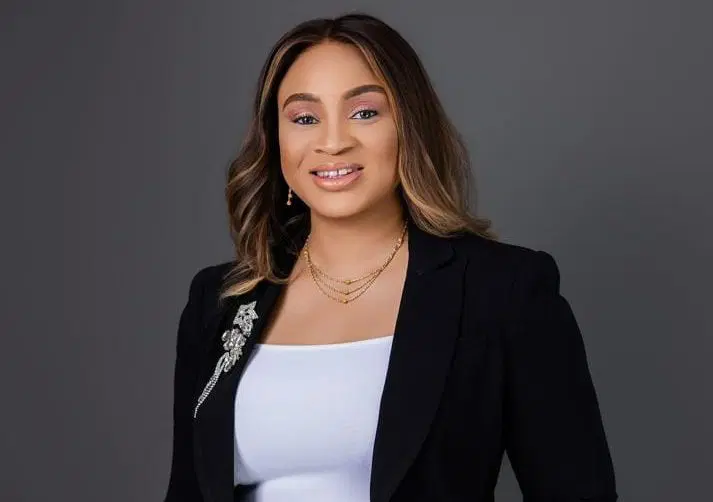
As Nigeria celebrates 66 years of independence, we also celebrate the women powering two of our nation’s most critical sectors – Energy and Marine.
For long, these sectors were seen as “men’s world”, from oil rigs to vessels, from plants to ports. Today Nigeria women are breaking the barriers and leading with excellence. They prove that competence has no gender. When we empower women in energy and marine industry, we empower national development, economic growth and sustainable prosperity.
Excerpts is an interview with the Managing Director of Loyz Marine Services Limited, Bassey Adie
As we celebrate Nigeria’s Independence, how would you assess Nigeria’s progress in the energy and marine sector since independence?
Nigeria has made significant progress in the energy and marine sectors since independence, although I believe we still have considerable work ahead of us. If you look at where we started, much of the technical expertise, ownership, financing and decisionmaking within the oil and gas and maritime sectors was dominated by foreign companies. Today, we have Nigerian companies participating across increasingly complex parts of the value chain. We have indigenous operators, vessel owners, marine logistics companies, engineers, seafarers and other professionals taking on responsibilities that would previously have been considered beyond local capacity. The Nigerian Oil and Gas Industry Content Development Act was particularly important in accelerating indigenous participation. We are seeing Nigerian companies build technical competence and take on more sophisticated scopes, including offshore logistics, vessel operations, engineering and other specialised services. However, our next phase has to go beyond participation. We need to build sustainable Nigerian ownership of critical assets, technology, technical competence and financing capacity. In the marine sector particularly, we still need greater investment in modern Nigerian-owned vessels and stronger access to long-term financing. The opportunity is enormous because Nigeria is not only an energy-producing country; we are also a maritime nation. We should therefore be developing the indigenous capacity required to support our offshore energy industry competitively and sustainably.
From your experience, what has been the evolution of women’s participation in the energy sector from independence until now?
The progress has been substantial. Historically, energy and maritime industries were overwhelmingly male-dominated, particularly in technical, offshore and operational positions. Today, women are increasingly visible across engineering, commercial, legal, finance, sustainability, project management and leadership roles within the energy industry. We now have women leading businesses, managing complex projects and occupying senior positions across the sector. Organisations such as the Women in Energy Network have also created important platforms for women to connect, collaborate and advocate for greater participation. However, we should distinguish between visibility and full participation. Women may be more visible today, but there are still areas, particularly offshore operations, marine engineering, seafaring and certain technical roles, where female representation remains relatively low. The next phase should therefore be about moving beyond simply celebrating women in energy to deliberately expanding the pipeline of technically competent women entering, remaining and progressing within the industry.
At Loyz Marine, how are you promoting gender inclusion and creating opportunities for women in technical and leadership roles?
At Loyz Marine, inclusion begins with the belief that competence should be the foundation for opportunity, while also recognising that sometimes deliberate action is necessary to ensure capable women actually have access to those opportunities. As a woman-led indigenous marine company, we are intentional about creating opportunities for women across our organisation and encouraging women to participate in areas that have traditionally been male-dominated. This cuts across leadership, legal, commercial, operations and technical functions. But for me, it is particularly important that we create opportunities within the operational side of the marine industry. For example, as part of our recent vessel crewing and localisation initiatives, we have deliberately requested the inclusion of female Nigerian seafarers onboard our operations. That is important because if we want to see more female Masters, Chief Engineers, Marine Superintendents and senior offshore professionals tomorrow, women need access to vessels, sea time, technical exposure and operational responsibility today. We also believe strongly in developing people rather than simply filling positions. Our localisation philosophy is about giving Nigerian professionals exposure to international equipment, systems and operational standards so they can build sustainable careers and compete globally. Beyond Loyz, through my work with the Women in Energy Network, I am also passionate about building partnerships that create wider opportunities for women across the energy value chain. Ultimately, inclusion must translate into something tangible: access, training, experience, responsibility, contracts, capital and leadership opportunities.
What are the major challenges still holding women back from thriving in the energy and marine industry?
One of the biggest challenges is access to opportunities. It is one thing to encourage women to enter the industry; it is another to ensure they have access to the projects, vessels, contracts, networks and experience that allow them to grow. This is particularly important in maritime. A woman may have the required education and certifications, but without access to vessels and sufficient sea time, it becomes difficult to progress into more senior positions. Access to finance is another significant challenge, particularly for women-owned businesses in capital intensive sectors such as energy and maritime. Marine operations require substantial investment in vessels, equipment, technology, personnel and certifications. Without affordable and patient financing, it can be extremely difficult to scale. There are also challenges around technical training, mentorship, sponsorship, retention and career progression. Mentorship is important, but sponsorship is equally important. Women also need people who are willing to open doors, recommend them for opportunities and trust them with meaningful responsibility. So we need to look at the entire pipeline – from education and recruitment to practical experience, retention, leadership, entrepreneurship and ultimately asset ownership. Addressing only one part of that pipeline will not be enough.
In your opinion, how can women’s increased participation contribute to Nigeria’s energy security and national development post-independence?
Energy security requires a broad and capable talent pool, and women represent a significant part of the talent and entrepreneurial capacity that Nigeria cannot afford to underutilise. When more women participate meaningfully in the sector, we increase the number of professionals, entrepreneurs, technical specialists and decision-makers contributing to solving Nigeria’s energy challenges. Women-owned businesses also create jobs, develop local supply chains, build capacity and contribute to economic activity. For Nigeria, therefore, this is not simply a gender issue. It is an economic and national development issue. Women should not participate simply because inclusion is fashionable or because an organisation needs to satisfy a target. Women should have the opportunity to participate because they are capable of creating value and contributing meaningfully to the development of the sector. If we want to build a resilient indigenous energy industry and strengthen our energy security, then we cannot afford to leave capable people behind.
What policy initiatives do you think government and the private sector should implement to empower more women in energy?
I believe we need a combination of policy, financing, capacity development and deliberate commercial opportunities. First, access to finance must improve. Existing and future initiatives targeted at women-owned businesses should be properly funded, accessible and structured around the realities of capital-intensive industries such as energy and maritime. Second, we need stronger pathways for women-owned companies to access meaningful opportunities within the energy value chain. Participation targets can be useful, but they must be accompanied by mechanisms that help businesses develop the technical and financial capacity required to deliver those opportunities sustainably. Third, we need greater investment in STEM education, technical training, internships, cadetships, mentorship and leadership development. In the maritime sector specifically, I would like to see greater emphasis on creating sea-time opportunities for female cadets and seafarers. We cannot train people and then deny them the practical experience required to progress professionally. The private sector also has an important role to play. Companies should deliberately identify capable women professionals and women-owned businesses within their workforce and supply chains and create opportunities for them to grow. Government, regulators, financial institutions, operators, educational institutions, vessel owners and industry organisations all need to work together. We need more than intention. We need deliberate action, measurable commitments and sustained support.
Who is Loyz Marine?
Loyz Marine Services Limited is an indigenous, woman-owned Nigerian marine logistics and offshore support company. We provide marine solutions across offshore support vessel chartering and operations, marine logistics, procurement and technical supply, manpower and maritime security support, supporting the broader requirements of the energy industry. Our objective is to provide safe, reliable and technically capable marine solutions while continuing to build indigenous capacity within Nigeria’s maritime and energy sectors. As a woman-led company, we are also conscious of the example businesses like ours can provide to other women who want to participate in traditionally male-dominated and capital-intensive industries. But our ambition is much bigger than participation. We want to build a Nigerian marine company with the assets, people, systems, technical competence and operational capability to compete sustainably at international standards. For us, local content is not simply about Nigerian ownership on paper. It must ultimately mean developing Nigerian people, building technical knowledge, acquiring and operating strategic assets and creating sustainable economic opportunities. Gender inclusion is an important part of that philosophy.
Finally, what is your Independence message to Nigerian women and youth aspiring to build a career in the energy sector?
My message is simple: do not limit yourself because of the industry you have chosen or because of the barriers you may encounter. The energy and maritime sectors need young Nigerians with competence, integrity, resilience and a willingness to learn. Acquire the skills. Get the necessary certifications. Seek practical experience. Find mentors and sponsors. Build meaningful relationships and be willing to start where you are. To women particularly, don’t wait for the industry to become perfectly comfortable for you before you participate. Prepare yourself, take your place and create value. But I also believe those of us who are already in positions of leadership have a responsibility. We cannot continually tell young Nigerians to work hard and prepare themselves while refusing to open the doors through which they can gain experience. As we celebrate Nigeria’s independence, I believe the next chapter of our development must be about creating opportunities for Nigerians to own, operate, innovate and lead. For me, true independence goes beyond political independence. It is also about our ability to develop our own people, build our own capacity, own strategic assets and create sustainable economic opportunities for the next generation. Nigeria’s next chapter in energy and maritime development will require all of us, and women and young Nigerians have an important role to play in building that future.
Source: Vanguard
Comment here