
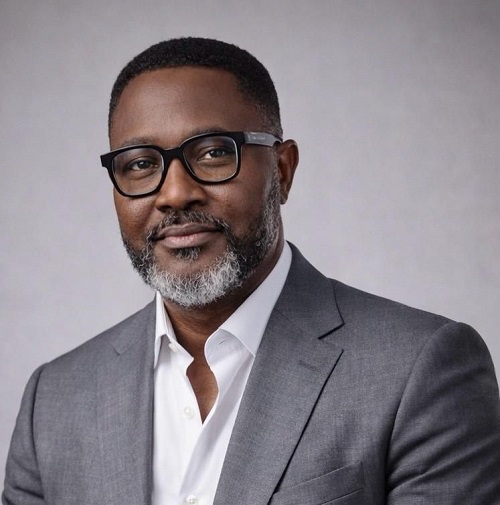
-By Sola Adebawo
Every budget tells the truth eventually. Not the truth governments announce, but the truth they fund. Public spending is often framed as a technical exercise, dense with numbers and insulated from everyday scrutiny. But budgets are where political rhetoric is forced into arithmetic, and arithmetic has a way of exposing what power is actually willing to protect. Over time, patterns emerge. Certain sectors remain consistently funded, even in constraint. Others are deferred, restructured, or quietly reduced. These are not random outcomes. They tend to reflect a deeper set of priorities shaped by influence, access, and political convenience.
Nowhere do these dynamics come into clearer focus than in Nigeria’s current fiscal moment.
On paper, the scale is ambitious. Nigeria’s 2026 federal budget was approved at roughly ₦68.3 trillion, up from an initial proposal of about ₦58.5 trillion. But the structure underneath tells a more constrained story. Projected revenues stand at about ₦34.3 trillion, leaving a deficit of roughly ₦23.8 trillion, based on recently approved figures and publicly reported estimates, including analysis by the BudgIT Foundation and reporting by Reuters.
That gap matters. Because when a government is forced to borrow at that scale, it is no longer simply allocating resources, it is making decisions about whose priorities justify future obligations. In practical terms, with revenues covering barely half of planned expenditure, borrowing is financing a substantial share of the budget, a pattern consistently highlighted in independent fiscal analyses.
This is where public spending stops being abstract and starts becoming political.
Consider the structure of the budget itself. A significant share is already spoken for before any new priorities are debated. Debt servicing, recurrent expenditure, and institutional overheads consume much of the fiscal space. Debt servicing alone is projected at between ₦15.5 trillion and ₦15.9 trillion in 2026, according to government projections and reporting by Reuters. In some estimates, this accounts for more than half of recurrent expenditure, meaning a substantial portion of what government spends on its day-to-day obligations is already committed to paying past debt.
The trajectory is just as revealing. Over the past five years, debt servicing has climbed sharply, rising from under ₦4 trillion in 2022 to nearly ₦16 trillion in 2026, based on reviews of federal budget data by independent analysts. This is not just a fiscal trend. It is a reordering of priorities.
To be clear, not all of these outcomes are the product of deliberate political design. Structural revenue constraints, legacy debt obligations, and implementation capacity all play a role. But even within those constraints, patterns of priority still emerge.
When a system is structurally committed to servicing past obligations, its capacity to respond to present needs becomes constrained. And when that constraint bites, choices have to be made.
Those choices rarely distribute pain evenly.
Education and health, for instance, have consistently received allocations below internationally recommended benchmarks, a concern repeatedly raised across policy and development circles. More broadly, budget reviews show that well over 60% of federal spending in recent cycles is absorbed by debt servicing, personnel costs, and overheads, leaving limited fiscal space for capital investment and social services.
Even where capital allocations are significant on paper, execution remains uneven. Historical performance suggests capital implementation rates often fall below 80%, weakening the translation of allocations into actual infrastructure and service delivery. So the issue is not only what is budgeted, but what is ultimately delivered.
At the same time, politically visible, large-scale infrastructure projects continue to secure attention and financing, often backed by new borrowing requests submitted to the National Assembly. Again, the pattern is not accidental. It reflects a hierarchy of visibility, influence, and political return.
In other words, not all spending is equal. Some spending signals necessity. Other spending signals power.
The politics becomes even clearer when one looks at how budgets are constructed, not just how they are implemented. Under Nigeria’s fiscal framework, the National Assembly has the authority to adjust and expand budget proposals, and has repeatedly increased total spending above executive submissions in recent cycles, as reported by Reuters. These adjustments often accommodate additional projects and obligations, reflecting the realities of political negotiation.
Budgets, in this sense, are not just financial documents. They are negotiated settlements.
Each insertion, each adjustment, each reallocation reflects a bargain. Between the executive and the legislature. Between national priorities and local political incentives. Between long-term planning and immediate electoral considerations. By the time a budget is passed, it carries the imprint of these negotiations, sometimes more strongly than it carries the imprint of any coherent development strategy.
And then comes the question of implementation, which is where the public conversation in Nigeria has become particularly intense.
It is one thing to appropriate ₦68 trillion. It is another to actually spend it effectively.
Recent debates across Nigeria’s policy and media space have focused on whether federal budgets are even realistically implementable at their current scale. Questions around revenue realism, deficit sustainability, and mid-year adjustments have featured prominently in legislative discussions and economic commentary. Nigeria’s fiscal deficit itself is projected at over 4% of GDP, reinforcing concerns about sustainability and execution.
At that point, the budget stops functioning as a clear annual plan and starts resembling a rolling negotiation.
And that has consequences.
Because when implementation becomes fluid, accountability becomes diffuse. It becomes harder to track what was promised, what was released, and what was actually delivered. It also creates space for selective execution, where certain projects move quickly while others stall indefinitely. Again, the pattern raises a familiar question: what determines which projects are prioritized in practice?
The answer, more often than not, circles back to power.
This is why the current Nigerian debate around budget credibility, fiscal discipline, and implementation gaps is not just a technical conversation. It is a political one. It is about whether public finance reflects citizen need or political convenience.
Recent developments reinforce this tension. Government interventions in sectors under pressure, from aviation cost pressures to large-scale infrastructure financing proposals, signal where urgency is recognized and where the state is willing to act decisively. These decisions are not made in isolation. They reflect judgments about economic stability, political visibility, and systemic risk.
Over time, these responses accumulate into a pattern. And that pattern becomes legible.
It tells citizens which risks the government is willing to absorb and which it is willing to pass on. It reveals whether fiscal policy is oriented toward broad-based welfare or toward sustaining specific economic and political structures. It shows whether reform is being driven by necessity or managed for stability.
In that sense, public budgets are less about numbers and more about priorities under pressure.
They answer questions governments rarely state explicitly. Who must be kept whole? Who can be deferred? What is non-negotiable? What is expendable?
And perhaps most importantly: whose voice is strong enough to shape those answers?
Because in the end, every budget tells the truth. Not immediately, and not always clearly. But eventually, through patterns, through trade-offs, through what gets funded and what does not, it reveals the structure of power behind the state.
The only question is whether we are willing to read it that way.
Sola Adebawo is an institutional strategy and public affairs leader with deep experience at the intersection of energy, governance, policy, and strategic communication. His writing explores reform, political economy, leadership, culture, and the relationship between institutions and public life. He is an author, scholar, and ordained minister.
Comment here