
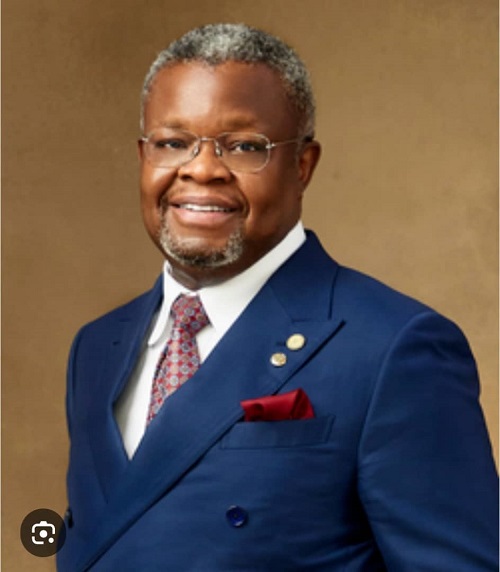
Dr. Daere Akobo
By Olaoye Samuel
In the first part of this series, I highlighted how Dr Daere Akobo’s conviction that indigenous engineering companies could deliver solutions that met international standards (while developing Nigerian expertise, retaining greater value within the domestic economy and contributing more directly to national development) led to the establishment of PE Energy Limited in Port Harcourt in 2009.
Today, PE Energy Limited is widely regarded as one of Nigeria’s foremost indigenous engineering and technology companies, with capabilities spanning engineering, procurement, integration, installation and maintenance across the oil and gas value chain. From its headquarters in Port Harcourt and offices in Lagos and Abuja, the company has grown into a trusted partner to operators in the petroleum, power and process industries, delivering automation, process and systems integration, flow control, metering and analytical solutions, rotating equipment, supply chain management and specialised engineering services. Over the years, it has played an increasingly important role in strengthening local engineering capacity, promoting technology transfer and advancing Nigeria’s local content agenda.
Yet PE Energy did not begin with aspirations of becoming a major integrated engineering company. Like many successful enterprises, it started by identifying a practical need within the market. The company initially operated as a Maintenance, Repairs and Operations (MRO) supplier, supporting clients with the equipment and technical solutions required to keep industrial facilities running efficiently. Akobo, however, never intended for it to remain simply another supply-chain business.
“We started as an MRO commodity supplier and transitioned to a solution provider and business transformation enabler,” he explained. That evolution was neither sudden nor accidental; it was strategically planned and systematically accomplished. From the outset, Akobo recognised what he described as the “technology gap” between end users in Nigeria and the foreign companies that supplied much of the specialised equipment and engineering expertise upon which the petroleum industry depended. Closing that gap required far more than importing equipment. It demanded local technical competence, engineering innovation and long-term investment in people.
Consequently, PE Energy steadily repositioned itself from a conventional supplier into a company capable of delivering integrated engineering solutions across the petroleum value chain.
A Deliberate Journey Up the Value Chain
PE Energy’s growth over the following decade reflected a carefully executed strategy rather than expansion for its own sake. The establishment of a Lagos office in 2013 marked the beginning of a broader national footprint, complementing its operations in Port Harcourt and bringing it closer to major clients and decision-makers within Nigeria’s commercial capital.
Two years later, PE Energy entered into strategic partnerships with leading international Original Equipment Manufacturers (OEMs). The move strengthened the company’s technical capabilities while advancing one of Akobo’s trademark objectives: helping to translate Nigeria’s local content aspirations into practical reality. Rather than merely representing overseas manufacturers, PE Energy sought to become a conduit for technology transfer, knowledge sharing and capacity development at home.
The strategy aligned closely with the objectives of the Nigerian Oil and Gas Industry Content Development Act, which encourages the domestication of skills, technology and manufacturing capability within the country’s petroleum industry.
As the company’s expertise expanded, so too did its ambitions. In 2017, PE Energy launched its Valve Automation Competency Centre (VACC) workshop, building local capability for valve automation, assembly and servicing. Easily overlooked by those outside the industry, the investment nonetheless represented a significant milestone. It confirmed that sophisticated engineering services traditionally performed abroad could increasingly be undertaken within Nigeria by Nigerian professionals operating to international standards.
It also reflected a broader philosophy that had driven the company from its earliest days: local content should not be measured merely by the number of contracts awarded to indigenous firms, but by the complexity of the work they are able to execute independently.
Engineering Capability as National Development
Throughout this period, PE Energy steadily expanded its technical offering beyond conventional engineering support. Leveraging partnerships with world-leading OEMs and internationally trained Nigerian engineers, the company developed expertise spanning valves and actuation, automation, electrical and instrumentation systems, flow measurement and management, rotating equipment, process solutions and integrated supply-chain services. Its capabilities gradually extended across exploration, production, processing, transportation and distribution, enabling it to address critical requirements throughout the oil and gas value chain.
The company’s philosophy differed in one important respect from that of many engineering contractors. Rather than simply supplying equipment, PE Energy increasingly focused on solving operational problems through integrated engineering solutions. Whether supporting process industries, delivering metering and analytical systems, providing rotating equipment or implementing automation technologies, the emphasis remained on improving operational efficiency, reliability and long-term asset performance.
This approach manifested clearly in the company’s growing investment in advanced technologies, including systems integration, smart metering, process automation and specialised diagnostic solutions. One notable example was its introduction of patented Stress Field Detection (SFD®) technology into Nigeria’s exploration industry, helping to improve the efficiency and cost-effectiveness of identifying and validating hydrocarbon reserves.
As the organisation matured, it also broadened its reach beyond the petroleum sector, applying its engineering expertise to power generation and to process industries such as food and beverage manufacturing. This expansion further demonstrated Akobo’s belief that engineering capability should serve as an engine of wider industrial development, rather than being confined solely to oil and gas.
From Local Content to Global Competitiveness
For Dr Akobo, local content has never been an end in itself. He has consistently emphasised that the ultimate objective should be to build Nigerian companies capable of competing anywhere in the world on the strength of their expertise, innovation and service quality. That philosophy is evident throughout PE Energy’s operations.
Its Quality Management System is built around internationally recognised standards, including API Spec Q1 and ISO 9001:2015, while its Nigerian Content Policy stresses not only compliance with regulatory requirements but also the development of local expertise, technology transfer, global exchange programmes and the domestication of engineering capabilities.
“Our goal remains to be the company of choice in Africa,” the company states in its Nigerian Content Policy. Those aspirations have increasingly been matched by practical investment. The opening of an Abuja office in 2019 strengthened PE Energy’s national presence, while the commissioning of its state-of-the-art Centre of Excellence in Port Harcourt in 2021 marked one of the company’s most significant achievements. Conceived as a systems integration hub for Sub-Saharan Africa, the facility reinforces Akobo’s long-held conviction that Nigeria should not merely consume advanced engineering solutions but should develop and export them.
The transformation continued in 2022, when PE Energy formally adopted an Engineering, Procurement, Integration, Installation and Maintenance (EPiiMtce) business model. The change represented far more than a refinement of services. It marked the company’s evolution into an integrated engineering organisation capable of managing projects across their entire lifecycle, from concept and design through procurement, systems integration, installation and long-term operational support.
It was the culmination of a strategy that had been unfolding since 2009. The company that began as a modest MRO supplier had evolved into a technology-driven engineering enterprise, illustrating what can be achieved when technical competence is matched by strategic vision and sustained investment in indigenous capability.
For Dr Akobo, however, PE Energy was never intended to be the final destination. It was proof that a larger vision could succeed; a vision that would eventually extend beyond engineering services into infrastructure, technology, manufacturing and integrated industrial development under the banner of PANA Holdings. That broader ambition would herald the next chapter of his remarkable journey. (To be continued).
Olaoye Samuel writes from Lagos (07033179360).
Comment here