
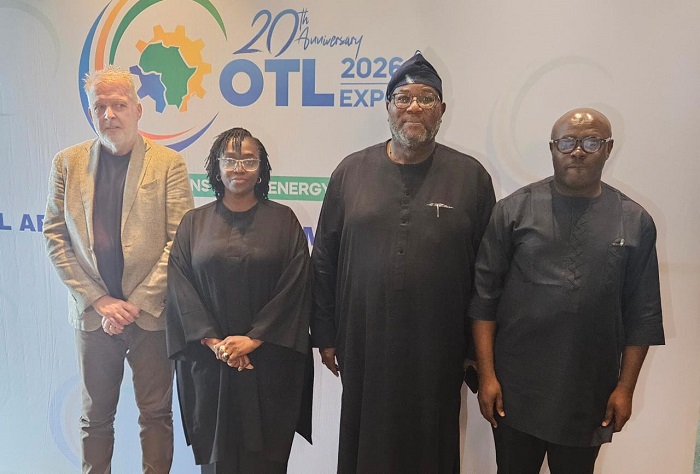
L-R: Ian Brown, Mrs Joyce Akabogu, Otunba Adetunji Oyebanji and Mr. Ugo Amadi at the OTL 2026 Media Parley in Lagos.
-Felix Douglas
Oil Trading Logistics (OTL) Africa Downstream Energy Week is set to mark its 20th anniversary with the 2026 edition bringing together stakeholders across Africa’s midstream and downstream energy sectors to discuss energy security, industry growth and shared prosperity.
The six-day conference and trade event will hold from October 25 to 30, 2026, at the Lagos Oriental Hotel under the theme, “Secure Energy, Shared Prosperity.”
Speaking to journalists at a media parley in Lagos, OTL Downstream Energy Week 2026 CEO Mrs Joyce Akabogu, said the anniversary edition is expected to provide a platform for industry leaders, policymakers, investors and other stakeholders to examine the challenges and opportunities shaping Africa’s energy landscape, particularly the need to strengthen energy security while ensuring that the benefits of industry growth reach businesses and consumers.
Akabogu stated further that the conference comes amid continuing concerns over energy affordability, market pressures and the difficulties facing Nigerians in recent years. These challenges have intensified discussions about effective policies, sustainable energy supply and the role of the private sector in building a more resilient energy market.
By focusing on energy security and shared prosperity, the event seeks to encourage dialogue on practical strategies for improving the availability and distribution of energy products, strengthening midstream and downstream infrastructure, and creating opportunities for investment across the value chain.
The 20th anniversary also represents a milestone for OTL Africa, reflecting two decades of engagement with stakeholders in the downstream energy industry and its contribution to discussions on the development of Africa’s energy markets, she added.
With Nigeria and other African countries seeking more reliable and affordable energy supplies, the conference is expected to highlight the importance of collaboration among governments, regulators, operators and investors in addressing industry challenges.
“The gathering will also provide opportunities for networking, knowledge-sharing and business engagement, with discussions expected to centre on policies and investments capable of supporting long-term growth in the sector.”
According to Akabogu, as OTL Africa celebrates two decades of industry engagement, the 2026 conference places the need to secure energy supplies alongside the broader objective of translating sectoral development into economic opportunities and improved living standards for Africans.
On his part, Ian Brown, Independent Consultant Transition Economy and Hydrocarbons, urged Nigerian policymakers to ensure that the benefits of recent economic reforms are not squandered, stressing the need for long-term strategies that improve living conditions rather than short-term political considerations.
Brown said Nigerians had endured significant economic hardship over the past two to three years, making it imperative for the government and other stakeholders to prioritise policies that ease the burden on citizens.
On the aspect of developments in the petroleum market, Chairman, OTL Africa Downstream Advisory Board, Otunba Adetunji Oyebanji, acknowledged that although the government was often blamed for the country’s economic difficulties, some of the factors driving the situation were beyond its direct control.
However, Oyebanji noted that government policies had also contributed to the challenges faced by the population, stressing that the impact of such measures on ordinary Nigerians must be taken seriously.
According to Oyebanji, the hardships experienced by citizens should not be allowed to go to waste, particularly if the reforms are expected to deliver long-term economic benefits.
“We all want to look forward to making life easier and ensuring that if there have been any benefits from the hardships that have been endured, they are not squandered,” he said.
The OTL Chairman Advisory Board cautioned against allowing political considerations to undermine long-term objectives of economic reforms, arguing that sustainable progress should take precedence over decisions driven by short-term political expediency.
Drawing on his extensive experience in Nigeria’s petroleum industry, he said he had witnessed several changes in the sector, including the evolution of the Petroleum Products Marketing Company (PPMC), repeated debates over fuel subsidy payments and fluctuations in petroleum product prices.
Oyebanji noted that fuel prices had experienced both increases and decreases over the years, adding that the country’s experience with petroleum pricing and subsidy policies should inform decisions about the sector’s future.
He stressed that policymakers must take a broader view of the industry and the economy, rather than focus solely on immediate political or economic gains.
“The long term is more important than the short-term game because of political expedience,” he said, clarifying that his remarks represented his personal opinion and not the official position of the organisation he represents.
Oyebanji comments came amid continued public concern over the cost of living and the effects of economic reforms, including changes to fuel subsidy arrangements and the resulting pressures on transportation and household expenditure.
He urged stakeholders to ensure that future decisions prioritise sustainable economic development and translate any gains from reforms into tangible improvements in the lives of Nigerians.
Comment here