
-Felix Douglas
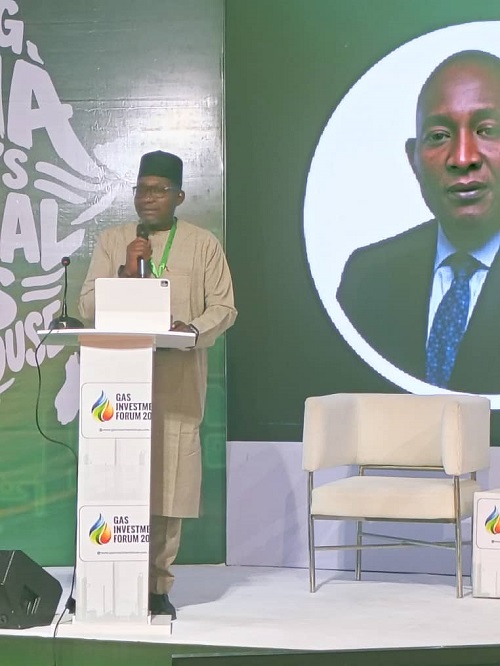
The Authority Chief Executive of Nigerian Midstream and Downstream Petroleum Regulatory Authority (NMDPRA), Mallam Rabiu Umar has called for increased investment in infrastructure and domestic gas utilisation to unlock the economic value of Nigeria’s vast gas resources.
Umar made this known at the 4th Gas Investment Forum in Lagos.
Nigeria does not have a gas shortage problem but a gas conversion issue, the NMDPRA Authority Chief has said.
He made the submission while highlighting the need for Nigeria to move beyond discussions about its vast gas reserves and focus on converting the resource into tangible economic value.
According to the NMDPRA official, Nigeria has about 215 trillion cubic feet (TCF) of gas reserves, with additional potential reserves estimated to be significantly higher.
Umar, however, said the major concern should be how much of the resource could be brought out of the ground and effectively utilised to support households, industries and businesses.
“Gas in the ground does not power a factory. Gas in the ground does not cook a meal, and suddenly it does not create a single job.”
He stressed the need to increase domestic gas utilisation by converting factories currently dependent on diesel to gas, expanding gas-powered businesses and promoting the use of gas for cooking.
The NMDPRA boss also identified infrastructure as a critical factor in unlocking the country’s gas potential, noting that gas requires substantial investment in processing, transportation, storage and distribution infrastructure.
He explained that the development of LNG infrastructure, for instance, requires significant capital investment, underscoring the need for sustained investment across the gas value chain.
Umar identified resources, infrastructure, rules, market and energy as key elements needed to develop Nigeria’s gas sector, adding that regulation serves as the link connecting the various components
The regulator does not see regulation merely as a compliance exercise, but as an instrument for building a functional market.
“Our job is not to set rules for the sake of setting rules or to collect fines or levies. Our job is how much we are able to create,” he said.
He said Nigeria must therefore focus on developing a gas market capable of attracting investment while ensuring that the country’s abundant gas resources translate into jobs, industrial growth, energy security and improved living standards.
His remarks also came against the backdrop of growing global concerns over energy security and volatility in the international oil and gas market, particularly following developments in the Middle East at the Strait of Hormuz between the US and Iran.
Comment here