
-Felix Douglas
The Women in Maritime and Energy (WIME) Awards marked a significant milestone with its 5th edition, celebrating outstanding individuals who continue to shape, transform, and advance Nigeria’s maritime and energy sectors.
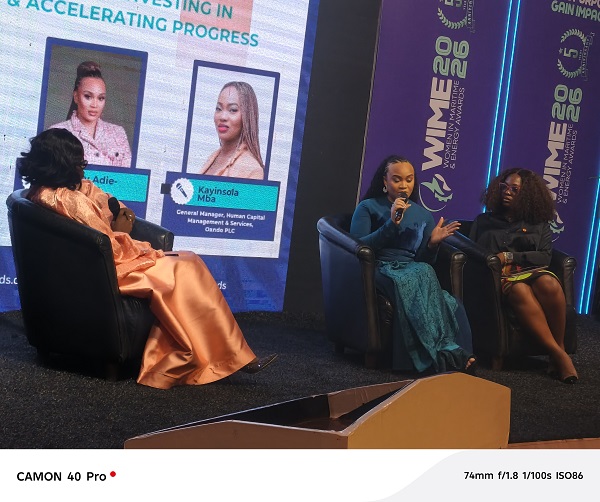
In a fireside chats at the 2026 WIME Awards, Mrs. Bassey Adie, Managing Director and Chief Executive Officer (MD/CEO) of LOYZ Marine Services spoke about her company and women involvement in running an organization.
Excerpts:
Q&A: Mrs Bassey Adie Oronsaye
You have built a career in a male-dominated industry. What did investing in yourself look like in the early stages of your journey, and how did this shape your company?
For me, investing in myself in the early stages was both intentional and practical.
I understood early that in a male-dominated industry like maritime and offshore energy, credibility is not assumed it is built. So I focused on developing substance.
This meant pursuing the right education, gaining cross-disciplinary knowledge, and developing a strong understanding of operations not just strategy. I was deliberate about positioning myself not as someone supporting the industry, but as someone actively operating within it.
Beyond formal learning, I invested in:
* Building competence and technical depth
* Developing strong professional relationships and access
* Strengthening my ability to execute consistently
I was intentional about showing up in rooms not just to participate, but to be known and respected for value. My goal was to get to a point where my work would speak for me, even before I was introduced.
That foundation directly shaped the growth of Loyz Marine.
Today, five years later, Loyz Marine has supported multiple Nigerian oil companies on their journey to first oil. We have worked with organizations such as Total, shell and Oando. We have also expanded operations offshore into Cotonou and contributed to the revitalisation of the Seme field, which had been inactive for over two decades.
From the very beginning, we built the company on three core pillars:
* Capacity: ensuring we had the technical and operational ability to deliver
* Compliance: meeting the strict standards required in a high-risk, high-value industry
* Capability: consistently executing what we say we can do
This industry is not forgiving. Mistakes are costly, and excellence is non-negotiable. That is why we prioritised structure, documentation, and standards from day one.
Ultimately, both my personal journey and the company’s growth have been anchored on competence, discipline, and the continuous building of substance.
What does it take to move women from participation to real ownership?
I don’t particularly subscribe to the idea of “empowering women,” because I believe women are already capable, competent, and equipped to lead.
What has been missing is not ability it is access.
From a business and industry standpoint, the numbers are telling. While there are thousands of registered companies operating in Nigeria’s energy and maritime sector, less than 1% are owned by women. This highlights a significant gap that needs to be addressed.
So the question is not whether women can lead it is how we create the right conditions for them to own and influence.
Ownership is the real game changer. It moves you from simply participating in the system to shaping it.
To achieve this, three key things are critical:
- Access to Opportunities
Opportunities must be structured to be inclusive. Without access to real contracts and participation, growth is limited.
- Access to Finance
Financing does not come from ideas alone it comes from bankable opportunities. Without access to structured contracts, funding will remain out of reach.
- Intentional Capacity Building
Women and emerging businesses must continuously build capacity in alignment with industry standards, policies, and operational realities.
We have already seen how intentional policy can drive change. Nigeria’s local content framework significantly increased indigenous participation in the sector. The next step is to apply that same level of intentionality to inclusion particularly for women.
Regulatory bodies, including the Nigerian Upstream Petroleum Regulatory Commission (NUPRC), have a critical role to play in ensuring that investment frameworks and policies create real, measurable opportunities for inclusive participation.
Closing Thought
If women are only participating, they are contributing.
But if women are owning, they are shaping the industry.
And if we are truly committed to transformation in the maritime and energy sectors, then we must move deliberately from access to participation to ownership and ultimately, to influence.
Comment here