
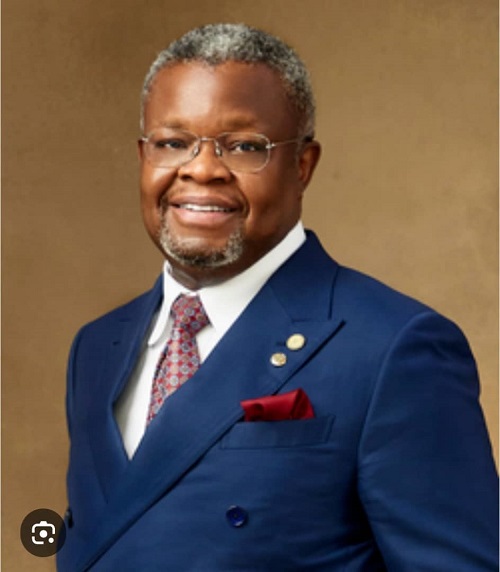
Dr. Daere Akobo
By Olaoye Samuel
In late February 2025, distinguished energy tycoon and industrialist, Dr Daere Afonya-a Akobo garlanded his remarkable career with yet another laurel when White Page International named him among the Global Power Leaders for the year. The recognition placed him among an exclusive group of business leaders from around the world acknowledged for their strategic leadership, innovation and contributions to economic development. The global consulting firm subsequently honoured him with the Global Business Conclave Leadership Award at a ceremony held in the historic House of Lords in London, celebrating business executives whose work has created measurable impact within their industries and beyond.
Interestingly, these accolades came on the heels of several other notable honours, including his 2022 induction into the Forbes Business Council, his 2023 conferment of the Nigerian Oil and Gas Excellence Award by the Nigerian National Petroleum Company Limited (NNPCL) and his emergence in 2024 as the African Energy Person of the Year, highlighting a growing international appreciation of both his personal achievements and the broader evolution of indigenous African enterprise. The 2024 award organisers particularly stated that Akobo was being recognised for his “outstanding achievements, visionary leadership and enduring commitment to advancing Africa’s energy agenda.”
It is the view of this author that while such well-deserved honours celebrate individual accomplishment, they also tell a much larger story. In Akobo’s case, they signal the growing maturity of Nigeria’s indigenous oil and gas industry and the increasing visibility of African companies in a sector that has, for decades, been dominated by multinational corporations. They affirm that leadership, innovation and technical excellence are no longer viewed as the exclusive preserve of established global players. Increasingly, Nigerian-owned companies are demonstrating the capability to execute complex projects, build strategic partnerships and compete within the international energy ecosystem.
The timing is especially significant. The country’s petroleum industry is passing through one of the most momentous periods in its history. Since the enactment of the Petroleum Industry Act (PIA) in 2021, fresh investments have begun returning to the upstream sector, while the Federal Government has intensified efforts to commercialise the nation’s vast natural gas reserves as part of its “Decade of Gas” initiative. Indigenous producers now account for a growing share of crude oil production, local content has deepened considerably, and discussions about energy transition, digital innovation and sustainability have become central to boardroom strategy.
More importantly, these changes have also redefined the profile of the modern energy executive. Technical competence alone is no longer enough. Today’s industry leaders are expected to build adaptable organisations, embrace technological innovation, develop local talent, maintain strong governance standards and navigate an increasingly complex global energy landscape. It is against this backdrop that Akobo’s journey becomes particularly impressive and instructive.
A Quintessential Gamechanger
Over roughly two decades, Dr Akobo has built businesses that have consistently challenged the notion that indigenous firms should remain confined to the margins of the petroleum value chain. Through engineering excellence, strategic partnerships and a sustained commitment to capacity development, he has helped demonstrate that Nigerian companies can deliver sophisticated technical services while meeting international standards of quality, safety and operational performance.
His rise also mirrors the evolution of the country’s local content journey. Three decades ago, indigenous participation in the oil and gas industry was largely concentrated in low-value support services. Critical engineering, fabrication, project management and specialised maintenance work were overwhelmingly undertaken by foreign contractors. Nigerian professionals possessed the knowledge and ambition to contribute more substantially, but opportunities to lead major projects remained limited. This resulted in an industry in which much of the value generated by the country’s vast hydrocarbon resources flowed beyond its borders.
That landscape has changed remarkably over the past two decades. The Nigerian Oil and Gas Industry Content Development Act of 2010 accelerated indigenous participation by encouraging the utilisation of Nigerian personnel, goods and services throughout the petroleum value chain. According to the Nigerian Content Development and Monitoring Board (NCDMB), local content performance has grown from less than five per cent in the early 2000s to more than fifty per cent today, representing one of the country’s most notable industrial policy successes. Although significant work remains to achieve the Board’s target of seventy per cent and beyond, the progress illustrates the increasing capability of Nigerian companies to undertake responsibilities once reserved almost exclusively for international operators.
Akobo belongs to the generation of entrepreneurs who have both benefited from and contributed to that transformation. Rather than seeing local content as merely a regulatory requirement, he has consistently argued that it should serve as a platform for building globally competitive enterprises. In numerous public engagements, he has emphasised that sustainable growth depends not on preferential treatment but on continuous investment in people, technology, innovation and operational excellence.
That philosophy has influenced every stage of his professional journey, crystallising in his personal motto: “A dream without a deadline is a nightmare.” From modest beginnings as a Projects Commissioning Engineer at IPCO, and later as Field Engineer and Sales Manager at General Electric, he steadily built a reputation for solving complex operational challenges before venturing into entrepreneurship. The companies he would later establish were never conceived simply as commercial ventures; they were designed to address gaps he observed within the industry: whether in engineering capability, project delivery, technology integration or local technical capacity.
Today, those businesses have grown into a cohesive conglomerate, with interests spanning the petroleum industry, energy solutions, infrastructure, digital solutions, financial services and agribusiness. Their evolution demonstrates not only Akobo’s entrepreneurial instincts but also his belief that Africa’s energy future will depend increasingly on diversified industrial capabilities rather than crude oil production alone.
Yet, despite the growing list of awards and corporate achievements, colleagues often describe Akobo not in terms of public recognition but for his relentless determination, analytical mindset, talent for uncovering opportunities where others see obstacles, and above all, his passion for giving back to society and improving the world around him. Those qualities have enabled him to navigate the cyclical nature of the petroleum industry, adapting to changing market conditions while maintaining a long-term focus on institutional growth.
His growing international honours therefore represent far more than the culmination of an individual career. They symbolise the emergence of a new generation of Nigerian energy leaders whose influence is increasingly measured not only by commercial performance but also by their contribution to industrial development, technological advancement and the strengthening of indigenous capacity.
A Well-Engineered Foundation
Gordon B. Hinckley’s timeless observation that “you must have a solid foundation if you’re going to have a strong superstructure” aptly captures the roots of Dr Daere Akobo’s sustained accomplishments. Years before emerging as one of Africa’s foremost indigenous energy entrepreneurs, he had laid a foundation built on matchless diligence, scientific enquiry, technical competence and a growing appreciation of how engineering, commerce and leadership combine to create lasting value.
Akobo studied Applied Physics at Rivers State University of Science and Technology (now Rivers State University). The training sharpened his analytical thinking and equipped him with a firm grounding in the scientific principles that underpin engineering systems, instrumentation and industrial processes. It also nurtured the disciplined approach to problem-solving that would become a hallmark of his professional life.
Recognising that technical expertise alone was insufficient in an increasingly global and competitive industry, he later broadened his leadership and business perspective through executive education at Harvard Business School, INSEAD and Alliance Manchester Business School. The blend of scientific training and executive development would prove invaluable as his career metamorphosed from engineering to commercial leadership and, ultimately, disruptive entrepreneurship.
Building Expertise for Innovation and Impact
Dr Akobo’s professional journey began in earnest in 1998 when he joined IPCO as a Projects Commissioning Engineer. Over the next five years, he was responsible for the pre-commissioning and start-up of industrial equipment supplied by leading original equipment manufacturers (OEMs), including David Brown pumps, FG Wilson generators, Gutor uninterrupted power supply systems and FMC marine loading arms. The role demanded meticulous attention to detail and a deep understanding of complex industrial systems, as commissioning marks the critical stage at which equipment is tested, integrated and prepared for safe and reliable operation.
Although his responsibilities extended across industrial engineering systems, the projects brought him into close contact with facilities and infrastructure supporting Nigeria’s petroleum industry. It was here that he gained first-hand exposure to the scale, complexity and technological sophistication of the sector, while developing an appreciation for the exacting standards required to deliver mission-critical projects.
Seeking broader technical and international experience, Akobo joined General Electric (GE) in 2004 as a Field Engineer. Over the next three years, his work took him beyond Nigeria to projects in Egypt, Tunisia, Angola, Qatar and Algeria, where he provided technical support for GE’s Panametrics and Bently Nevada product lines. The assignment exposed him to diverse operating environments, advanced industrial technologies and international best practices, broadening both his technical expertise and his understanding of the global energy industry.
His progression within GE was both rapid and instructive. Having established himself as a capable engineer, he transitioned into commercial leadership as Sales Manager, where he was responsible for marketing GE’s enterprise solutions across several countries. The role expanded his perspective beyond engineering execution to client engagement, business development and strategic market positioning. It was during this period that he began to appreciate that technical excellence alone does not build successful organisations; it must be complemented by commercial insight, sound management and an understanding of customers’ evolving needs.
Akobo’s final assignment at GE would prove especially formative. Appointed Sourcing Manager for Nigeria in 2008, Akobo oversaw sourcing activities across GE’s in-country businesses while supporting the development of local content. The position provided a rare vantage point from which to observe the industry’s supply chains, procurement systems and value creation processes. It deepened his understanding of how multinational corporations built resilient businesses and reinforced the strategic importance of developing capable local suppliers.
At the same time, it prompted deeper reflection about the future of Africa’s energy industry. He became increasingly concerned that many multinational companies operating in Nigeria and elsewhere on the continent generated significant value from Africa’s abundant resources without making a commensurate contribution to building indigenous industrial capacity. While they brought technology, investment and employment, much of the higher-value engineering expertise, decision-making and economic returns remained concentrated outside the continent. That realisation became a defining moment in his professional journey.
Incidentally, Akobo was among the highest-paid Nigerians working for a multinational company at the time. He was even recognised as a “top talent.” So, it would have been more convenient for him to remain in a secure and rewarding corporate career. Yet the more he reflected on the structural imbalance he had observed, the more convinced he became that sustainable national development required more than local participation in international businesses. It required strong indigenous companies capable of developing local talent, delivering world-class engineering solutions and retaining greater value within the domestic economy.
It was this conviction, driven by more than a decade of technical practice, international exposure and commercial leadership, that inspired Akobo to take the entrepreneurial leap. In 2009, he founded PE Energy Limited, not merely to establish another engineering services company, but to demonstrate that an indigenous Nigerian enterprise could deliver technical excellence to international standards while contributing meaningfully to national development, from industrial capacity, to human capacity development and community empowerment. (To be continued.)
Olaoye Samuel writes from Lagos (07033179360)
Comment here