
EINGICE 2025 COMMUNIQUE ISSUED AT THE END OF THE SECOND (2ND) ANNUAL EMOGAS’ INTERNATIONAL NATURAL GAS-BASED INDUSTRY CONFERENCE AND EXHIBITION (EINGICE) ORGANISED BY THE GAS & ENERGY DEVELOPMENT COUNCIL OF EMOGAS LIMITED, AND HELD ON 30TH – 31ST OCTOBER, 2025 AT PTDF TOWERS MAIN AUDITORIUM, PLOT 105B MEMORIAL DRIVE, OPPOSITE SHEHU MUSA YAR’ADUA CENTRE, CENTRAL BUSINESS DISTRICT, CADASTRAL ZONE AOO, FEDERAL CAPITAL TERRITORY (FCT), ABUJA, NIGERIA.
1.0 PREAMBLE
(1) Emogas Limited’s Gas and Energy Development Council (GEDeC) launched a best-inclass natural gas industry conference and exhibition – EINGICE, that brings together major stakeholders in the oil and gas industry in Nigeria, Africa and around the world to discuss, brainstorm, strategize, educate, and advocate on the prospects and problems facing the global natural gas industry with a special focus on Africa.
(2) A key objective of EINGICE is to advocate for the strategic removal of the key gas development hurdles daily faced by African economies one of which is a severe lack of access to finance for natural gas and natural gas-related investment and development projects, especially in the exploration, production, and utilization phases.
(3) EINGICE engages in strong local and global advocacy that will lead to Africa achieving accelerated increase in approvals for natural gas investment and development projects – projects that would scale rapidly to meet Nigeria and Africa’s geographical and socioeconomic potential, and with little or no reliance on entities external to Africa.
(4) GEDeC traditionally ensures a conference theme and sub-themes that are topical in the area of energy, particularly, natural gas and its various technology options for monetization, including LNG, CNG, LPG, Green gases, renewable energy, and other related and emerging green technologies.
(5) At the end of each edition of EINGICE, impactful recommendations are made to assist, enhance and promote Africa’s industrialization and socio-economic development.
(6) This second edition – EINGICE 2025, was held at the PTDF Towers, Plot 105B Memorial Drive, Abuja, Nigeria, on 30-31 October, 2025 with the theme “Guaranteeing Africa’s Exit from Energy Poverty through Natural Gas Project Financing and Development with a Focus on Nigeria: Strategies and Actionable Steps.”
(7) The panel session and roundtable session sub-themes for the EINGICE 2025 were: (1) “Advancing Economic Growth and Energy Security through Financing, Investment and Development of Africa’s LNG Infrastructure”; (2) “The Strategic Role of Africa’s Energy Banks and Governments towards Easier Procurement of Natural Gas Industry Equipment and Technologies”; and; (3) “Leveraging Natural Gases as Products and Feedstocks towards Transformative Growth of Africa’s Refining and Petrochemical Market”.
(8) EINGICE 2025 received generous sponsorship from many companies and organizations operating within oil and gas industry, including: Petroleum Technology Development Fund (PTDF); Nigerian Content Development and Monitoring Board (NCDMB); Aradel Holdings PLC; Belemaoil Oil Producing Limited; Greenville LNG; Peso Energy Services Limited, CypherCrescent Limited; Kenyon International West Africa Co. Limited; Keves Global Leasing Limited; McLazzy Integrated Services Limited; Geyser LNG Limited; and Laser Engineering and Resources Consultants Limited. Other strategic support for EINGICE 2025 came from the Presidential Initiative on CNG (Pi-CNG) and the Nigerian Upstream Petroleum Regulatory Commission (NUPRC).
(9) More than two hundred (200) delegates/participants attended EINGICE 2025 in person from within and outside Nigeria; and others, about one hundred and fifty (150) participated virtually from different parts of the World. All categories of industry stakeholders were fully represented at EINGICE 2025. 2.0 OVERVIEW
(10) EINGICE 2025 started with intensive two-day (2-Day) pre-conference human capacity development (HCD) activities which held on the 28th and 29th of October, 2025, at PTDF Towers’ Meeting Rooms. The HCD activities were organized to meet one of the core objectives of EINGICE which is to build capacities and capabilities in Nigeria’s Oil and Gas Industry both from the human and institutional perspectives. The organization and delivery of strategic, specialized and innovative training and educational programs will drive the growth of the industry, advance Nigeria’s and Africa’s economy and energy future.
(11) One of EINGICE 2025 pre-conference HCD activity involved an academic TrainThe-Trainer program where twenty-five (25) selected university professors and lecturers across Nigeria participated in an intensive 2-Day Training Short Course on ‘Global Best Practices for Teaching, Learning, Training and Human Capacity Development (HCD) In the Energy Sector’. This HCD activity aims to enhance the teaching and research capabilities of university lecturers in core Oil and Gas disciplines, and the energy sector. Other trainees that attended include oil and gas industry trainers, energy technology instructors and facilitators, technical training consultants, company in-house trainers, and HCD practitioners. On successful completion of the Course, a certificate endorsed by Empowering the Teachers Fellows and Professors from the Massachusetts Institute of Technology (MIT), United States of America, were awarded to each trainee/delegate.
(12) Another EINGICE 2025 pre-conference HCD activity involved the organization and delivery of a highly intensive 2-Day Oil & Gas Professional Training Short Course on ‘Techniques for Troubleshooting and Rectifying Problems in Oil & Gas Production and Processing Systems’. Twenty (20) oil & gas industry professionals and personnel participated in this training, including personnel from Government and Government agencies, oil and gas upstream and midstream producing companies, and oil and gas service companies. The training equipped participants with new skills and techniques to enhance their job performance, and to become world-class experts in Troubleshooting and Rectifying Oil and Gas Production and Processing Systems. A certificate endorsed by one of the largest energy workforce solution providers in the United States of America (USA), was awarded to each delegate at the end of the training.
(13) On Day 1 of the actual conference and in his welcome address, the Chairman of EINGICE 2025 Conference Planning Committee (CPC), who is also the Pro-Chancellor of the European University of Nigeria as well as the Immediate Past Vice-Chancellor of Nnamdi Azikiwe University, Nigeria, Professor Charles Okechukwu Esimone, noted that EINGICE is a product, initiative and passion of an indigenous oilfield service company – Emogas Limited, to bring together experts from every facets of the oil and gas industry to critically evaluate and examine the gaps and the challenges faced by the natural gas sector, and to go beyond examining those gaps and proffer valid tangible solutions. He noted that energy poverty makes Africans to languish in penury and poverty in spite of the abundant energy resources and he is, therefore happy and grateful that top industry players and speakers have identified with EINGICE and are still identifying with EINGICE in this initiative that will help in salvaging Africa from energy poverty to energy prosperity.
(14) The conference was declared open by the EINGICE Convener and Founder/Managing Consultant of Emogas Limited, Engr. Dr. Emeka Okafor, who in his opening remarks emphasized how Africa still grapples with the evolving geopolitics of gas amid the low levels of energy access, increasing level of energy poverty and limited ability of Africa to mobilize private or public capital for natural gas-based development projects. Dr. Okafor noted the impressive presence of C-Suite industry executives and CEOs, top government officials, technical experts and innovators, world class speakers, policy makers, and strategic investors and financiers, and other industry heavyweights, which signifies a shared dedication to Africa’s progress, industrialization, innovation, and excellence in the natural gas industry. He noted that Africans are now ready to champion a transformative and sustainable growth of Africa’s energy future. Dr. Okafor encouraged delegates to, over the two days of the conference, engage in meaningful and impactful discussions, learn from one another, and build connections that will drive the gas industry forward.
(15) Goodwill messages were delivered by the following persons: (1) Founder and Managing Consultant of Laser Engineering and Resources Consultants Limited, Professor Mike Onyekonwu; (2) Executive Chairman and Chief Executive Officer of the Presidential Initiative on CNG (PI-CNG), Barrister Ismael Ahmed, OON; (3) Executive Secretary of the Nigerian Content Development and Monitoring Board (NCDMB), Engr. Felix Omatsola Ogbe, ably represented by NCDMB’s PCAD General Manager, Mrs. Lekoma Phimia; and (4) Executive Secretary (ES) of the Petroleum Technology Development Fund (PTDF), Mr. Ahmed Galadima Aminu, ably represented by PTDF’s Head of Gas Division, Mr. Ere Iyalla.
(16) Over the two days duration of the conference, there were two panel discussion sessions and another two roundtable sessions involving more than twenty-five (25) speakers, panelists and moderators. Each session started with very insightful and evidence-based keynote speeches focusing on the relevant theme and sub-themes.
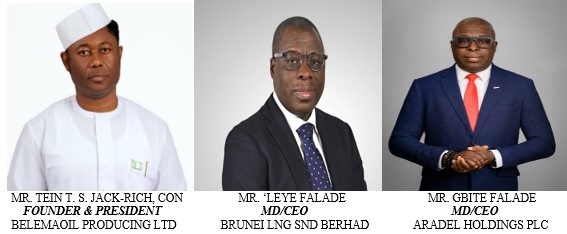
(17) Mr. Gbite Falade, Chairman of Independent Petroleum Producers Group (IPPG) and Managing Director/Chief Executive Officer of Aradel Holdings PLC, delivered a very insightful and captivating conference keynote speech focusing on “Guaranteeing Africa’s Exit from Energy Poverty through Natural Gas Project Financing and Development with a Focus on Nigeria: Strategies and Actionable Steps’. Another insightful perspective came from the Founder and President of Belemaoil Producing Limited, Mr. Tein T.S. Jach-Rich CON, who shared a panel discussion session with Mr. Gbite Falade focusing on conference theme.
(18) Mr. Leye Falade, Managing Director and Chief Executive Officer of Brunei LNG Sendirian Berhad who is also the incoming Managing Director and Chief Executive Officer of Nigeria LNG Limited, delivered an excellent roundtable sub-theme keynote speech on ‘Advancing Economic Growth and Energy Security through Financing, Investment and Development of Africa’s LNG Infrastructure’. Another very insightful speech on the above sub-theme was delivered by the Chief Executive Officer of GasInvest Limited and NonExecutive Director of NNPC Limited, Dr. David Oluwaseyi Ige.
(19) A panel discussion session sub-theme on ‘The Strategic Role of Africa’s Energy Banks and Governments towards Easier Procurement of Natural Gas Industry Equipment and Technologies’, featured three keynote speakers and they are: (1) Technical Director and Chief Executive Officer of CypherCrescent Limited, Engr. ThankGod Egbe; (2) Executive Secretary, Nigerian Content Development and Monitoring Board (NCDMB), Engr. Felix Omatsola Ogbe, ably represented by NCDMB’s PCAD General Manager, Mrs. Lekoma Phimia; and (3) Fmr. Minister of State, Petroleum Resources, Federal Republic of Nigeria and Fmr. Group Managing Director and Chairman of NNPC Limited, Professor Emmanuel Ibe Kachikwu, ably represented by the Chief Executive Officer of Africenergy and Infrastructure Limited, Engr. Bassey Rex, who is also the de facto keynote speaker of the second roundtable session focusing on ‘Leveraging Natural Gases as Products and Feedstocks towards Transformative Growth of Africa’s Refining and Petrochemical Market.’
(20) The Managing Director and Chief Executive Officer of Kenyon International West African Co. Limited, Dr. Victor Ekpenyong, sat on the panel session discussing ‘The Strategic Role of Africa’s Energy Banks and Governments towards Easier Procurement of Natural Gas Industry Equipment and Technologies’ while the President of Technology Transfers Inc., Professor Godwin Igwe, sat on the roundtable session discussing ‘Leveraging Natural Gases as Products and Feedstocks towards Transformative Growth of Africa’s Refining and Petrochemical Market.’
(21) Other featured top panelists and moderators at EINGICE 2025 include: (1) Group Chief Financial Officer of Greenville LNG, Mr. Raju Limbachiya; (2) Group Chief Technology Officer of Pan Ocean – Newcross Group and Immediate Past President of the Nigerian Association of Petroleum Explorationists (NAPE), Dr. Abiodun Ogunjobi; (3) Founder and Chief Executive Officer, QCS+ Consulting and Immediate Past Principal/Chief Executive of Petroleum Training Institute (PTI), Dr. Henry Adimula; (4) Partner at Aluko & Oyebode, Oghogho Makinde; and (5) Immediate Past Director of the Centre for Information and Communication Technology at the University of Port Harcourt, Professor B. Omijeh, who stood in for the Chief Executive Officer of Oida Group, Mr. Emeka Ene, who could not eventually make it to the conference at the last minute due a personal family emergency.
(22) There was presentation of awards to nine deserving awardees on both days of the conference with the following persons as recipients of the awards: (1) Executive Secretary of PTDF, Mr. Ahmed Galadima Aminu (Human Capacity Development Outstanding Agency Award); (2) Founder and President of Belemaoil Producing Limited, Mr. Tein T. S. Jach-Rich CON (Oil and Gas Industry Outstanding Philanthropist Award); (3) Managing Director of NNPC Engineering and Technical Company, Mr. Salahuddeen A. Tahir (Gas Industry Men in Leadership Excellence Award); (4) Chief Executive Officer of GasInvest Limited and Non-Executive Director of NNPC Limited, Dr. David Oluwaseyi Ige (Nigerian Gas Master Plan Outstanding Leader and Innovator Award); (5) Founding President of Nigerian University of Technology and Management, Dr. Babs Omotowa (Excellence in Education Leadership and Mentorship Award); (6) Managing Director of Greenville LNG, Ms. Ritu Sawajwalla (Nigerian Small Scale LNG Value Chain Excellence Award); (7) Founder and Managing Consultant of Laser Engineering and Resources Consultants, Emeritus Professor Mike Onyekonwu (Oil and Gas Outstanding Consultant and Trainer Award); (8) Pro-Chancellor of the European University of Nigeria as well as the Immediate Past Vice-Chancellor of Nnamdi Azikiwe University, Nigeria, Professor Charles Okechukwu Esimone (Africa’s Gas and Energy Development Outstanding Enthusiast Award); and (9) Deputy Director of Gas Production and Utilization at Nigerian Upstream Petroleum Regulatory Commission, Engr. Jennis Anyanwu (Regulatory Excellence Award).
(23) The reading, discussion and adoption of draft communique (DC) took place on Day 2 of the conference.
(24) The print and electronic media were also fully represented including Arise TV, The Guardian, NAN, etc.
(25) Closing remark was given by conference Chairman, Professor Charles Esimone while the vote of thanks which formally ended the Conference. was delivered by conference planning committee Secretary and MD/CEO of McLazzy Integrated Services Ltd, Engr. Lazarus Allahdey Musa.
3.0 OBSERVATIONS
The following observations were made during the various speeches and accompanying panel and roundtable discussion sessions at EINGICE 2025:
ON GUARANTEEING AFRICA’S EXIT FROM ENERGY POVERTY THROUGH NATURAL GAS
(26) Across the world, energy remains the lifeblood of modern civilization. Yet, in Africa, energy poverty persists, and this has become one of the continent’s greatest barriers to sustainable development.
(27) With over 620 trillion cubic feet (TCF) of proven reserves, Africa has immense potential to harness natural gas as a driver of inclusive and sustainable growth.
(28) Nigeria makes up about one-third of Africa’s total gas reserves – the largest reserves on the continent—estimated at 210.54 trillion (TCF), and this therefore puts the country in the strategic position to lead this transformation.
(29) With the continent’s population projected to double by 2050, there will obviously be increasing demand for energy to power industries, households, and growing urban economies.
(30) Natural gas offers a cleaner, more efficient, and flexible energy option capable of bridging the gap between traditional fossil fuels and renewable energy.
(31) However, realizing this potential requires deliberate strategies, innovative financing mechanisms, and robust infrastructure. Africa cannot build a sustainable future without energy and energy is the golden thread that connects economic growth, social development, and environmental protection.
(32) Africa suffers the so-called energy paradox where 600 million Africans lack electricity access entirely and 900 million people depend on biomass for cooking.
(33) Africa also faces resource paradox where she holds 17.5 trillion m³ of gas reserves (9% global), yet only 5% of energy mix comes from gas, with less than 5% of global energy investment despite vast potential. Thus, Africa is still not able to transform these reserves for the continent’s economic development and effectively fashion out its energy transition.
(34) Energy poverty is the single biggest brake on Africa’s growth and competitiveness and natural gas is the bridge fuel and can serve both as a transition and destination fuel.
(35) Gas-fired power generation is a dependable baseload for manufacturing and urban growth. It also brings about clean cooking as LPG rollout reduces deforestation and airpollution deaths.
(36) Gas serves an Industrial feedstock important in Fertilizer, methanol, petrochemicals, steel, and cement plants. Gas is also a renewable anchor, tripling gas use and enabling eight-fold renewable capacity growth.
(37) There are challenges hindering Africa’s exit from energy poverty including: (1) Energy financing crisis due to ESG constraints: (2) Development Finance Institution (DFI) retreat; (3) Local capacity gap; and (4) double standards.
(38) Africa receives less than 5% of global energy investment despite hosting 18% of the world’s population.
(39) Thus, the challenge is not the abundance of gas reserves, but the capacity and accessibility to finance, develop, and commercialize them sustainably.
(40) Effective natural gas project financing encompasses both domestic and international investments, stable policy environments, and risk-sharing frameworks that attract diverse funding sources.
(41) Very importantly, natural gas is a strong catalyst to exit energy poverty and this is buttressed by the story of Qatar that demonstrated the example of country moving from gas reserves to prosperity.
(42) Transferable Lessons to Nigeria from Qatar’s story include reinvesting export revenues, establishing long-term vision, providing sovereign guarantees, securing anchor loads, and deploying natural gas for development.
(43) Nigeria must quickly review her current strategies for financing and development of the gas sector to ensure full and adequate utilization of our reserves in growing and expanding her economy.
ON ADVANCING ECONOMIC GROWTH AND ENERGY SECURITY THROUGH LNG
(44) To strategically advance economic growth and energy security through financing, investment, and the development of LNG infrastructure is a subject of immense importance to Africa’s future.
(45) Nigeria – the continent’s gas giant, has proven gas reserves of over 200 trillion cubic feet (TCF), ranking among the top ten globally. Algeria – with about 159 TCF, is the third-largest gas supplier to Europe and a long-standing LNG exporter with extensive infrastructure. Mozambique – home to massive offshore discoveries in the Rovuma Basin, with proven reserves exceeding 100 TCF, Egypt – has about 63 TCF of proven reserves while Libya – holds over 50 TCF, though underdeveloped due to instability, Libya remains an important part of Africa’s gas map. Senegal and Mauritania – joint reserves at the Greater Tortue Ahmeyim field stand at about 15 TCF. while Tanzania has estimated reserves of around 57 TCF. Collectively, these reserves are not just numbers in reports; they are an inheritance, a responsibility, and an opportunity.
(46) Liquefied Natural Gas (LNG) provides a transformative and strategic opportunity if properly harnessed into power generation and industrial growth. LNG provides a transition energy source in our match towards a low-carbon future, strengthening intraAfrican energy trade under the African Continental Free Trade Area (AfCFTA), and positioning Africa as a reliable supplier to global LNG markets.
(47) The promise of LNG will not be realized through reserves alone but demands the right infrastructure: liquefaction plants, pipelines, regasification terminals, storage facilities, and efficient distribution networks.
(48) Across our continent, several projects already illustrate both the challenges and the promise of LNG as presented below.
(49) Nigeria LNG (NLNG), Bonny Island is one of the pioneers, and this project has become Africa’s largest industrial investment and a model of how natural gas can drive exports, create thousands of jobs, and generate revenue for national development. With Train 7 under development, capacity is expanding by 35%, strengthening Nigeria’s role as a global LNG supplier.
(50) Mozambique’s Rovuma Basin which was discovered just over a decade ago, with gas fields representative of one of the most significant finds in recent history. The Coral South FLNG project, already producing, is a groundbreaking floating LNG facility, while the larger onshore Mozambique LNG project is poised to transform the country’s economy, despite temporary delays. These projects are expected to create tens of thousands of jobs, lift GDP, and place Mozambique on the global LNG map.
(51) Senegal and Mauritania’s Greater Tortue Ahmeyim (GTA) Project which straddles the maritime border, and which is a joint development with BP and Kosmos Energy is a landmark in regional cooperation. The floating LNG facility is designed to deliver gas for both export and local use, supporting energy security while positioning Senegal and Mauritania as new entrants to the global LNG trade.
(52) Tanzania’s LNG ambitions, with negotiations advancing, is preparing to monetize its deep offshore reserves through a multibillion-dollar LNG terminal. Once operational, this project has the potential to fuel domestic power generation while providing export revenues to fund development priorities.
(53) Each of the above African LNG project examples shows what is possible when vision, investment, and partnerships converge. They are more than projects — they are platforms for transformation.
(54) Africa has the capacity for more LNG projects! However, the path to more LNG projects is not without obstacles, as presented below.
(55) One obstacle is the ever-present financing gaps due to LNG projects requiring billions in upfront capital with global financial institutions becoming cautious with hydrocarbon projects due to energy transition pressures. Without innovative financing — including public–private partnerships, sovereign wealth funds, and blended finance — many projects will remain on paper.
(56) A second obstacle is infrastructure bottlenecks in which pipelines, ports, regasification terminals, and power plants lag far behind reserves. And without integrated infrastructure, gas cannot reach markets or households.
(57) A third obstacle is regulatory uncertainty which is a key reason Investors demand clarity and stability. In some jurisdictions, shifting fiscal regimes, corruption risks, and political instability undermine confidence.
(58) A fourth obstacle is security concerns where, for example, in regions like Mozambique, insurgency has disrupted project timelines. Thus, stability and strong governance are essential to protect investments as no investor likes their billion-dollar asset sitting in a conflict zone.
(59) A fifth obstacle is global transition pressures characterized by increasing calls to decarbonize, and the strategy here is to position LNG as part of the transition, not in conflict with it, which would then require Africa to balance investment in LNG with parallel commitments to renewables.
(60) In spite of the afore mentioned obstacles, LNG is predicted to account for over 70% of total growth in global gas supply by 2040 though there is the Africa Conundrum with low per capita consumption yet 20% exporter.
(61) Thus, LNG is here to stay, and Africa must be a part of it to maximize economic development. However, global LNG market is built around: large–scale exports; individual country offtake or countries well connected by pipeline. Africa is none of these. Africa’s LNG revolution will need a fundamental rethink that pulls together governments, regulators and investors.
ON THE STRATEGIC ROLE OF AFRICA’S ENERGY BANKS AND GOVERNMENTS TOWARDS EASIER PROCUREMENT OF GAS EQUIPMENT AND TECHNOLOGIES
(62) Energy banks can significantly power growth in equipment procurement and development. Chinese energy banks led renewable energy financing remains a great example and success story.
(63) African energy banks (AEB) have important role in gas industry equipment procurement through: (1) facilitating capital-intensive purchases (compressors, turbines, etc.); (2) providing leasing or vendor-financing for E&P firms; (3) supporting bulk procurement frameworks to lower costs; (4) offering letters of credit, performance bonds, and guarantees; and (5) encouraging local content development and manufacturing.
(64) African energy banks also have a role to play in Research and Development through: (1) funding university–industry partnerships and pilot studies; (2) supporting innovation in gas processing, storage, and transport; (3) financing carbon capture and methane emission control research; and (4) promoting local technology and capacity building.
(65) The funding mechanisms may include: (1) direct project loans; (2) public–private partnerships (PPPs); (3) energy and green bonds; (4) research grants and endowments; and (5) risk-sharing facilities with government or development banks.
(66) However, we must point out the Procurement Challenge in Africa’s Gas Industry which include: (1) high upfront capital requirements for advanced technologies; (2) limited access to specialised equipment and engineering software; (3) extended lead times from international suppliers; (4) currency fluctuation risks and foreign exchange constraints; (5) knowledge gaps in technology evaluation and selection; and (6) complex regulatory and compliance frameworks.
(67) Towards supporting the planned Africa Energy Bank (AEB), the Federal Government of Nigeria pledged the sum of US$100 million as an initial subscribed capital – an attestation of the role of government towards easier procurement practices as well as an unwavering commitment of Nigeria towards AEB’s success.
(68) The AEB serves as a catalyst for industrial development, procurement efficiency, and local manufacturing across Africa’s energy landscape and accelerate access to critical equipment and technologies, especially in the natural gas value chain.
(69) AEB’s operations should be guided by key principles such as: (1) local content and industrial linkage as part of its financing conditions; (2) deployment of flexible instruments — from credit guarantees to equity and concessional loans; (3) provision of technical advisory and procurement support; (4) promotion of cross-border value chains to support the African Continental Free Trade Area (AfCFTA) and achieve economies of scale; (5) and transparent governance and accountability that will foster investor’s confidence in Africa Energy.
(70) The AEB should also act as a knowledge and capacity hub that would assist countries in harmonizing standards strengthening procurement systems, and ensuring that local suppliers are equipped to participate competitively.
(71) On our expectations, the AEB can play a defining role in galvanizing Africa’s energy industry. The financing gap for energy infrastructure, particularly natural gas processing and transportation, remains in the tens of billions annually. By offering derisking instruments and guarantees, the AEB can crowd-in private institutional investments and support indigenous companies that often struggle to secure affordable credit.
(72) The AEB can also facilitate aggregated procurement, for instance, multiple African countries needing gas compressors or processing modules could pool demand through the AEB, negotiate bulk discounts, and secure better financing terms. Such aggregated procurement will reduce costs, enhance standardization, and promote regional manufacturing. Over time, African fabrication yards and technology providers can meet these needs locally, making procurement easier, faster, and cheaper.
(73) Government can provide single-digit loans to indigenous oil and gas companies through a strategic partnership with the AEB and other banks.
(74) The African Energy Bank presents an opportunity to create a home-grown solution, an institution built on African realities, managed by African professionals, and driven by African priorities. To achieve this, governments across the continent must align policies, harmonize procurement standards, and create the much-needed enabling environment for the AEB to thrive.
ON LEVERAGING NATURAL GASES FOR TRANSFORMATIVE GROWTH OF AFRICA’S REFINING AND PETROCHEMICAL MARKET
(75) Africa continues to import a majority of its refined fuels and petrochemical products. However, with coordinated investment, natural gas can anchor new petrochemical and refining clusters across Africa.
(76) Leveraging refinery gases as valuable products and feedstocks would significantly boost Africa’s economic growth by enhancing energy security, driving industrialization and diversification, creating jobs, and increasing government revenues and foreign exchange savings.
(77) Transitioning from traditional biomass or diesel generators to cleaner-burning refinery gases (e.g., for cooking) also helps solve indoor air pollution problems, which has significant public health benefits.
(78) Leveraging refinery gases as marketable products like Liquefied Petroleum Gas (LPG) and Compressed Natural Gas (CNG) can significantly address Africa’s energy access challenges and reduce environmental impacts by providing cleaner, more reliable, and domestically sourced energy alternatives to traditional, polluting fuels
(79) Refinery gases can fuel gas-fired power plants, providing a reliable, on-demand power source that complements intermittent renewable energy sources like solar and wind. This helps close the electricity access gap and provides the stable energy needed for industrialization and economic growth.
(80) By utilizing domestically produced refinery gases, African nations can reduce their reliance on imported fuels, insulating their economies from volatile global market prices and improving national energy security.
(81) Investing in the infrastructure (pipelines, storage, distribution networks) needed to process and distribute refinery gases creates jobs, stimulates local economic development, and fosters a domestic market for energy products.
(82) Beyond power generation, refinery gases serve as essential feedstock for industries such as fertilizer and petrochemical production, boosting the agricultural sector and supporting industrial growth.
4.0 RECOMMENDATIONS/CALL TO ACTION
In light of the observations during the four keynote speeches and accompanying panel and roundtable discussion sessions at EINGICE 2025, the Conference rose with the following recommendations as resolutions and a call to action:
ON GUARANTEEING AFRICA’S EXIT FROM ENERGY POVERTY THROUGH NATURAL GAS
(83) To guarantee Africa’s exit from energy poverty through natural gas, Africa must develop a strategic path forward and Nigeria must take the center stage and should quickly review her current strategies for financing and development of the gas sector to ensure full and adequate utilization of our reserves in growing and expanding her economy. And in doing so, Africa must focus on:
(84) (1) innovative strategies for securing both local and global financing such as blended finance in which combining sovereign, DFI, and private capital are considered;
(85) (2) massive local and regional gas infrastructure development;
(86) (3) leveraging natural gas as a transitional fuel for industrialization and power generation;
(87) (4) ensuring policy credibility with full implementation of legal provisions including the Petroleum Industry Act to anchor investor confidence;
(88) (5) leveraging Gas Infrastructure Bonds modeled after NLNG Train 7;
(89) (6) promoting bankable projects that assures feasibility, transparent contracts, and clear offtake frameworks;
(90) (7) Ensuring regional integration and security which will strengthen WAGP and TSGP for intra-African trade; and
(91) (8) ensuring multi-agency coordination to protect infrastructure and engage communities.
(92) Actionable steps must be taken to ensure this exit which include: (1) a robust financing framework that attracts investment through partnerships with institutions like the European Investment Bank and others alike; (2) the implementation of advanced technologies and supply chain resilience; and (3) the creation of gas-based industries, such as fertilizers and petrochemicals, connected by modern infrastructure like highspeed rail.
(93) Africa must reform gas pricing. We need to move from state-controlled to marketdriven pricing to incentivize producers to supply the domestic market over more lucrative export markets. This is crucial for the bankability of gas-to-power projects in Nigeria.
(94) Africa must establish effective regulatory institutions with functional capacities to streamline the approval and process turnaround times, to create “one-stop shops” with a view to reducing bureaucracy and bottlenecks for investors.
(95) Africa also need to ensure policy consistency for a stable and predictable policy environment is essential for long-term project financing. Regulatory certainty builds investor confidence.
(96) Africa must blend public and private capital by utilizing public-private partnerships (PPPs) and blended finance, which combines public funds with private investment, to derisk projects and attract a broader pool of investors into our natural gas development space. Access to internal and external financing is very important. Leveraging domestic financial institutions to access long-term, single-digit naira funding from local capital markets, including bonds and pension funds, to reduce exposure to foreign exchange volatility, as well as accessibility to The Central bank of Nigeria (CBN) intervention facilities for gas value chain which is aimed at stimulating investments.
(97) Africa must attract capital for projects by providing investment guarantees and reducing risk for investors through partnerships with international Development Finance Institutions (DFIs). Incentives and a stable financial environment are key, as international investors often have a “wait and see” approach due to perceived risks.
(98) Africa must accelerate infrastructural development through strategic investment that can expand pipeline networks to reach industrial zones and population centers. This includes projects like the Ajaokuta-Kaduna-Kano (AKK) pipeline, which is nearing completion.
(99) Africa should implement policies that prioritize the use of natural gas for power generation to address, for example, Nigeria’s persistent electricity shortages. This will involve securing adequate and reliable gas supplies for Independent Power Plants (IPPs).
(100) Africa must eliminate gas flaring by enforcing stringent regulations and incentivizing companies to capture and commercialize flared gas for domestic use, which can generate revenue, reduce environmental damage, and provide fuel for power generation.
(101) Africa must invest in midstream infrastructure including gas processing plants, storage facilities, and terminals to support the entire gas value chain, from production to delivery to end-users.
(102) Africa should promote natural gas as a transitional fuel by emphasizing the role of natural gas infrastructural development in powering industrialization, creating jobs, and driving economic growth.
(103) Africa should integrate renewable energy by investing in green technologies and carbon credit mechanisms to ensure a just and sustainable energy transition alongside the gas-to-power strategy. This will result in the adoption of a balanced energy strategy that uses natural gas to provide reliable base-load power, which can enable higher penetration of intermittent renewable energy sources like solar and wind.
ON ADVANCING ECONOMIC GROWTH AND ENERGY SECURITY THROUGH LNG
(104) Advancing economic growth and energy security through LNG development projects and moving from promise to prosperity requires bold action and Africa must build upon the following six: (1) Financing the future; (2) Investing with local impact; (3) Developing infrastructure for energy security; (4) Combining sustainability and transition; (5) Promoting inter-governmental and inter-agency alignment; and (6) Addressing price volatility issues. Lets take this call to action one after the other:
(105) FINANCING THE FUTURE: The scale of capital required for LNG projects is immense, running into the tens of billions. This is not small change; it is the kind of financing that test the strength of entire economies. To put it into perspective, developing a single large LNG facility can cost as much as building several transcontinental highways. It’s like trying to buy a Rolls Royce when your bank only offers bicycle loans — traditional financing alone simply won’t do. This is why Africa must think innovatively. Public–private partnerships can de-risk projects and attract global capital. Blended finance models can bring in concessional funds from development partners alongside commercial investments. Green financing instruments — such as climate-linked bonds — can be leveraged, especially when we position gas as a replacement for dirtier fuels like coal and diesel. But financing alone is not enough. Bankability will depend on our ability to provide policy stability, regulatory clarity, and transparent governance. Investors are not allergic to risk — they are allergic to uncertainty. If we want the billions to flow, we must create environments where capital feels not just welcome, but secure.
(106) INVESTMENT WITH LOCAL IMPACT: Foreign direct investment will always be a driver of mega-infrastructure, but it cannot be the whole story. Africa must ensure that LNG development leaves more than just export terminals and balance sheet profits. This means local content — African engineers building the pipelines, African shipyards fabricating components, African service companies maintaining facilities, and African workers filling the jobs. We must go beyond being resource providers to being value creators. Every dollar of investment should be tied to skill transfer, technology adoption, and the growth of African industries. If LNG exports earn billions abroad but fail to reduce unemployment or expand local industries at home, then we have built castles for others while our people live in tents. The measure of success must be how LNG contributes to Africa’s industrialization, job creation, and long-term prosperity.
(107) INFRASTRUCTURE FOR ENERGY SECURITY: Energy security is often framed in terms of export earnings, but for Africa, it is also a matter of dignity and development. How can we supply energy to the world while millions of our own citizens remain in the dark? LNG infrastructure must therefore serve two masters: the global market and the domestic consumer. Export terminals and shipping routes must be complemented by pipelines, gas-to-power plants, fertilizer factories, and distribution networks that feed African homes and industries. Think of it this way: gas without infrastructure is like having food with no cutlery — valuable, but unusable. By building integrated systems that prioritize both exports and domestic use, we can transform gas into a tool for regional integration, industrial growth, and reliable energy access. In doing so, LNG becomes not only a foreign exchange earner, but also a cornerstone of Africa’s internal energy resilience. Africa will need to adapt port infrastructure to support LNG deliveries with port charges and related dues needing to be streamlined to support cost-efficient LNG delivery. Regulations and policies at the port should be flexible enough to support LNG business activities.
(108) SUSTAINABILITY AND TRANSITION: No conversation about LNG is complete without recognizing the global push for decarbonization. Critics often frame hydrocarbons as outdated, but natural gas has a legitimate role as the bridge fuel of our time — especially for Africa. Gas emits roughly half the carbon of coal and significantly less than oil. In regions where kerosene, diesel, and coal remain dominant, LNG offers a pathway to reduce emissions while powering growth. But we must go further: by coupling LNG infrastructure with renewables — solar in the Sahel, wind in East Africa, hydropower in Central Africa — we can leapfrog into a future where Africa provides energy that is both abundant and responsible. Positioned this way, LNG is not in conflict with the energy transition but is part of it. It is the fuel of development today that enables the cleaner economies of tomorrow. Africa should not be made to choose between growth and green; we can and must pursue both.
(109) INTER-GOVERNMENTAL AND INTER-AGENCY ALIGNMENT: Africa will need inter-governmental alignment since many countries are landlocked. Thus, collaboration with coastal countries and intergovernmental collaboration to address cross-border issues such as customs duties, passage, infrastructure standards and others should be firmly established. Also, there must be inter agency alignment characterized by broad alignment across agencies, and acceptable standards to enable cost effective landing of LNG.
(110) PRICE VOLATILITY: Africa will need to address the issues of price volatility and global LNG dynamics because most African offtakers are unable to manage price volatilities typical of LNG, thus there might be need for pricing structures bespoke to Africa to enable acceptability.
ON THE STRATEGIC ROLE OF AFRICA’S ENERGY BANKS AND GOVERNMENTS TOWARDS EASIER PROCUREMENT OF GAS EQUIPMENT AND TECHNOLOGIES
(111) African Energy Banks and Governments should deploy useful procurement facilitation strategies that will make equipment procurement easier. This may include (1) framework agreements with pre-negotiated terms with OEMs for standardised equipment; (2) bulk procurement with regional aggregation of demand for better pricing; (3) digital platforms with online procurement marketplaces linking buyers and suppliers; (4) local manufacturing with joint ventures with global OEMs for in-country production; (5) technical standards with harmonised specifications to enable cross-border movement; and (6) equipment funds with dedicated financing vehicles for gas equipment leasing and innovation with equipment-as-a-service models where providers maintain ownership
(112) African Energy Banks and Governments should consider the following quick wins for Implementation: (1) Establish Regional Gas Technology Procurement Hub; (2) Create Pre-approved Equipment Vendor Database; (3) Launch Joint Financing Facility (Energy Banks + DFIs); (4) Implement Software Licensing Consortium for bulk discounts; (5) Develop Standardised Modular Design Templates; (6) Create Pan-African Training & Certification Program; and (7) Fast-track customs and import procedures for critical equipment (113) A call to action must involve the different stakeholder action: (1) African Energy Banks should develop specialised gas infrastructure financing products; (2) Governments should enact enabling policies and provide fiscal incentives; (3) Industry should form strategic partnerships and share procurement intelligence; (4) Academia should support workforce development and technology research; and (5) All stakeholders identified above should join hands to build Africa’s gas industry procurement ecosystem.
ON LEVERAGING NATURAL GASES FOR TRANSFORMATIVE GROWTH OF AFRICA’S REFINING AND PETROCHEMICAL MARKET
(114) Africa should focus on increasing the commercialization of refinery gases as it offers a pragmatic “bridge fuel” strategy for Africa, addressing immediate energy poverty and health challenges while paving the way for a more sustainable and industrialized future.
(115) African refineries could adapt and develop several technological advancements to transform low-value gases (such as ethane, propane, and off-gases from refining processes) into high-value petrochemical intermediates like ethylene and propylene
(116) Africa should implement a comprehensive, transparent strategy that prioritizes domestic industrialization through a diverse mix of gas monetization options, while actively attracting private and foreign investment through stable, supportive policies. This approach will drive economic growth by creating jobs, generating revenue, and enhancing energy security, moving beyond a focus solely on raw exports to develop value-added industries like power generation, fertilizers, and petrochemicals.
(117) African Government should see refinery gases as a natural resource that is of significant economic value to Africa and the gas must be viewed as one of the solutions to many of Africa’s energy problems.
5.0 CONCLUSION
(118) Africa is standing at a crossroads. We hold vast reserves, demonstrated projects, and growing global demand in Africa’s favour. Yet we also face financing hurdles, infrastructural gaps, and transition pressures. If we act boldly — mobilizing innovative financing, ensuring regulatory clarity, prioritizing domestic benefits, and forging global partnerships — Africa’s natural gas and LNG will not only power industries abroad but also illuminate villages at home. The time is now to turn reserves into revenues, projects into prosperity, and gas wealth into genuine human development. Let us lay the foundation for a stronger, more secure, and more prosperous Africa.
6.0 EINGICE 2026 ANNOUNCEMENT
(119) The conference planning committee (CPC) hereby announce that the 3 rd Emogas’ International Natural Gas-Based Industry Conference and Exhibition (EINGICE) – EINGICE 2026, will take place from 28 to 29 October 2026 in the Federal Capital Territory (FCT), Abuja, Nigeria.
(120) EINGICE 2026 conference theme is ‘Accelerating Africa’s global LNG trade share and driving gas industrialization through innovative and strategic upstream petroleum and gas producer synergies and investment decisions’.
(121) A roundtable sub-theme pf EINGICE 2026 is ‘Strategies for powering Africa’s entrepreneurial talent in the energy sector through AI, AI-powered software, and digital solutions—with a focus on NG, CNG, LNG, LPG and green technologies’.
(122) A brochure/conference pack containing full details of EINGICE 2026, including partnership and sponsorship/exhibitor opportunities, will be released shortly.
Engr. Dr. Emeka Okafor EINGICE Convener
Comment here