
Infrastructure is not merely a support system for economic growth; it is the engine that powers productivity, industrialisation, investment, and national competitiveness. Nations that achieve sustained economic transformation do so through deliberate infrastructure investments that unlock commerce, improve energy access, and create enabling environments for businesses to thrive.
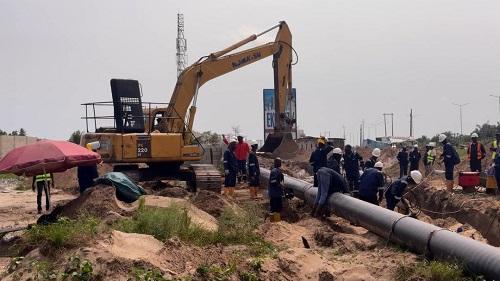
In Lagos, one of the clearest demonstrations of this is the ongoing Victoria Island–Lekki natural gas pipeline project being executed by Axxela. The project represents more than pipeline expansion; it is a strategic economic corridor that will fuel industrial growth, strengthen energy reliability, and support the rapid commercial evolution of Lekki and its surrounding areas.
The 72.5km pipeline network, stretching from Outer Marina to Victoria Island, and now well beyond its first commissioned phase in Eko Atlantic City, is designed to extend deep into the Lekki corridor. Ultimately, it will support critical economic assets, including the proposed Lekki International Airport and emerging industrial clusters along the axis.
As Lagos continues to emerge as one of Africa’s leading commercial hubs, energy infrastructure becomes increasingly central to sustaining economic growth. Reliable natural gas supply offers industries and businesses a cleaner, more cost-efficient alternative to diesel dependence, reducing operating costs while improving operational stability. This has direct implications for manufacturing competitiveness, retail developments, hospitality businesses, real estate development, logistics operations, and broader investor confidence.
Axxela’s execution of this project reinforces the critical role of private-sector participation in national infrastructure development. While NNPC Gas Marketing Limited (NGML) owns the infrastructure, Axxela drives its utilisation by building out the pipeline network and enabling end-user adoption. Over the past two decades, the company has significantly expanded Nigeria’s gas distribution footprint, demonstrating strong technical expertise in delivering complex natural gas infrastructure across challenging terrains.
Through strategic pipeline investments, Axxela has supported industrialisation and energy access across key commercial and industrial hubs, including Ikeja, Ilupeju Ojota, Apapa, Isolo, Mile 2, Sagamu, and Trans Amadi, spanning Lagos, Ogun, and Rivers States. The company’s sustained investment and execution capabilities continue to position it as a leading case study in market development, infrastructure innovation, and private sector leadership in Nigeria’s gas industry.
The broader economic significance of the VI–Lekki pipeline lies in what it enables: self-sustaining economic clusters, improved energy security, job creation, and long-term urban resilience. Infrastructure of this scale creates multiplier effects that extend well beyond construction, stimulating enterprise growth, attracting capital, and strengthening the foundations for inclusive economic expansion.
For Nigeria, the path to sustainable growth will depend heavily on continued investments in critical infrastructure. Projects such as the VI–Lekki natural gas pipeline demonstrate that when infrastructure development is aligned with economic ambition, it becomes a catalyst for transformation, competitiveness, and national prosperity.
Comment here