
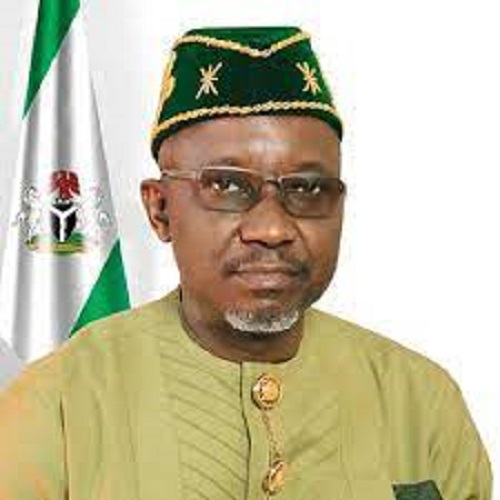
Hon. Ekperikpe Ekpo, Minister of State for Petroleum Resources (Gas).
By Olaoye Samuel
On 30 April, the NNPC announced the completion of the River Niger crossing of the 130-kilometre Obiafu-Obrikom-Oben (OB3) Gas Pipeline, a major milestone in the expansion of Nigeria’s national gas transmission network that had eluded contractors and ministers alike for the better part of a decade. The crossing, technically demanding and repeatedly deferred, had been the single remaining obstacle preventing the OB3 pipeline from reaching operational status and delivering up to two billion standard cubic feet of gas per day into the national transmission network.
That the crossing was finally achieved under the watch of Rt Hon. (Obongemem) Ekperikpe Ekpo, Nigeria’s pioneer Minister of State for Petroleum Resources (Gas), is not a matter of timing or coincidence. Ekpo had visited the OB3 project site repeatedly since assuming office in August 2023, holding contractors to account, interrogating progress against specific milestones, and maintaining a level of ministerial attention that the project had not previously received. The completion of the River Niger crossing was, in that respect, a direct consequence of sustained and deliberate oversight.
It is also representative of a broader pattern. Across the nearly three years of his tenure, Ekpo has established himself as a results-driven administrator, with a record marked by revitalised infrastructure projects, frozen investments unlocked through commercial negotiations, and a domestic gas penetration programme extended to all six geopolitical zones of the country.
A Long-Awaited Change
It is worth noting that Nigeria holds over 209 trillion cubic feet of proven natural gas reserves, ranking among the largest endowments on the African continent and one of the most consequential energy assets anywhere in the world. Yet, until the recent administration of President Bola Ahmed Tinubu, gas had occupied a curiously marginal place in national energy policy. Considered a dispensable by-product of crude oil extraction, it was largely flared into the night sky rather than captured and processed for its multifaceted potential.
That narrative has changed significantly since President Tinubu moved to split the Ministry of Petroleum Resources into separate oil and gas portfolios, giving Rt Hon. Ekpo the mandate to manage the gas sector as a strategic asset in its own right. Of course, for the average Nigerian, nowhere has the execution of that mandate been more visible than in the rapid rise of compressed natural gas across the country. Today, CNG buses move through major cities, conversion centres are multiplying, and refuelling stations are gradually forming a national network. Ekpo has played a central role in this deliberate policy execution under the Presidential CNG Initiative.
The scale of change is indeed striking. The CNG Conversion Programme is now active in 23 states, with vehicle conversion capacity increasing by nearly 3,000 per cent. More than 337 conversion centres operate nationwide, supported by over 93,000 conversion kits already procured. The refuelling network has expanded to dozens of stations across multiple states. Five mini-LNG facilities have been commissioned in Kogi State to supply gas feedstock to northern states, extending the reach of the CNG programme into regions previously underserved by pipeline infrastructure. Moreover, hundreds of buses and thousands of tricycles powered by CNG have entered circulation, and close to 100,000 jobs have been created. This is yet another dimension of the new awakening reverberating across Nigeria’s gas sector under Ekpo’s leadership.
An Unconventional but Strategic Background
Quite remarkably, Ekpo’s journey into his pioneering role did not follow the conventional path expected of a reformer in the petroleum industry. Born on 20 November 1966 in Ika, Akwa Ibom State, he was educated at St Dominic Primary School and St Augustine Secondary School before proceeding to the University of Calabar, where he studied Biology with a specialisation in Ecology. He later returned to the same institution in 2015 to complete a Master’s degree in Environmental Pollution and Toxicology. His early professional life was spent in the classroom, where he taught science and rose to become Head of Department and eventually Dean of Studies at Queen of Apostles Seminary in Abak, a position he held for eleven years before resigning in 2002 to pursue public service.
This background, which initially attracted scepticism from some analysts, would ultimately prove strategic. Teaching demands patience, clarity and persistence, qualities that translate effectively into public administration, particularly within systems where progress is often slowed by inertia. Ekpo’s transition into public service marked the beginning of a different kind of engagement with development.
As a local government chairman, he confronted practical challenges that required immediate solutions. One of his notable achievements was facilitating the completion of an abandoned electrification project that connected his community to the national grid for the first time. This experience offered an early glimpse into a defining pattern of his leadership: a refusal to accept stalled projects as permanent realities.
His tenure in the House of Representatives further broadened his perspective. Serving from 2007 to 2011, he represented the Abak/Etim Ekpo/Ika Federal Constituency and contributed to committees on Industry, Customs Service, National Security and Intelligence, Power, and Niger Delta Affairs. In doing so, he developed a working understanding of how policy intentions are formulated, negotiated and sometimes diluted within the machinery of government.
Moving Stalled Projects Forward
The completion of the OB3 River Niger crossing, significant as it is, is not the only infrastructure milestone of Ekpo’s tenure. It is accompanied by comparable progress on the Ajaokuta-Kaduna-Kano pipeline, a project whose history of delay had made it, alongside OB3, one of the most visible symbols of the gap between ambition and delivery in Nigeria’s infrastructure landscape.
The AKK pipeline, a 614-kilometre, $2.8 billion gas transmission project, is designed to transport gas from Ajaokuta in Kogi State northward through Abuja and Kaduna to Kano, forming part of the broader Trans-Nigeria Gas Pipeline system. For years, it suffered repeated delays across successive administrations, consuming significant public resources without delivering the intended supply to industries, power consumers and households in the North. By the time Ekpo assumed office, its completion timeline had been revised so frequently that it had lost credibility within the industry.
Ekpo addressed this through the same approach he applied to OB3: direct and sustained ministerial oversight. In his first hundred days, he visited both project sites, held accountability sessions with contractors and NNPC management, and established clear completion benchmarks. He returned to the sites repeatedly over subsequent months to review progress against specific milestones. The AKK pipeline is now nearing completion and is scheduled to become fully operational in July 2026, a credible and documented timeline that did not exist in the same form before his intervention.
Commercial Reforms and Investment Mobilisation
Progress on the physical infrastructure of gas transmission addresses only one dimension of the sector’s inherited dysfunction. The commercial conditions that had made the sector unattractive to investors required equally direct attention, and Ekpo’s record in this area is no less significant than his infrastructure achievements.
The resolution of the thirteen-year debt standoff between gas producers and electricity generating companies was among his most consequential early interventions. The accumulated arrears had created a structural impasse in which producers would not increase supply into a market that had not paid for what it already received, whilst generators could not reliably plan capacity expansion without assured gas supply. A structured repayment mechanism negotiated under Ekpo’s oversight gave producers sufficient confidence to maintain and expand supply while providing a credible path for clearing the historical debt. The intervention addressed a problem whose persistence had been directly limiting gas availability to the power sector and whose resolution was a necessary precondition for any meaningful improvement in gas-to-power performance.
The resolution of the Gas Sales Purchase Agreement for the Brass Methanol Project demonstrated comparable results in a different commercial context, unlocking three billion dollars in investment that had been held pending contractual resolution. The Midstream and Downstream Gas Infrastructure Fund, under his stewardship, directed approximately 122 billion naira to private investors for infrastructure development across the midstream and downstream segments of the value chain. A four-billion-dollar investment commitment from the Jindal Steel Group provided further evidence that investor confidence in the sector had improved materially since his assumption of office.
Supporting these transaction-level outcomes, the ministry secured zero VAT treatment for imports of gas, CNG, LPG and related equipment, alongside tax incentive arrangements designed to encourage greenfield gas projects, particularly in onshore and shallow water acreages. These regulatory and fiscal measures have improved the structural investment climate in ways that extend beyond the individual transactions they directly enabled.
“The Federal Government is attracting investment in LNG, CNG, and gas-to-chemicals,” Ekpo told an industry gathering. “By fostering a business-friendly environment, Nigeria is building a sustainable gas ecosystem that drives industrialisation, job creation, and energy security.” The investment figures behind that statement provide the substantiation.
Domestic Gas Penetration
Parallel to the industrial and commercial agenda, Ekpo has pursued a domestic gas penetration programme designed to extend the practical benefits of the country’s gas resources to ordinary households and the transport sector. Aside from the Presidential CNG Initiative earlier mentioned, the LPG Penetration Programme has the target of converting 250,000 households annually to liquefied petroleum gas for cooking, with the objective of reaching five million homes by 2030. The programme has completed its rollout across all six geopolitical zones, with the South-East launch in Owerri, Imo State, representing the final leg of its national coverage.
“This rollout is more than cylinders,” Ekpo said at the Owerri launch. “It is a deliberate commitment to the health, safety and economic well-being of our people. Clean cooking reduces respiratory diseases, protects our forests, strengthens household economies, and creates opportunities for women and youth across the value chain.”
These programmes address a dimension of energy poverty that aggregate production statistics do not adequately capture. For millions of Nigerian households, the country’s substantial gas reserves had historically conferred no direct benefit. The domestic penetration agenda is an attempt to change that in concrete and measurable terms, and its rollout across all six geopolitical zones represents a more complete national coverage than most comparable programmes have previously achieved.
Continental Diplomacy and Regional Integration
Ekpo has engaged the regional and continental dimensions of Nigeria’s gas position with comparable consistency, working to advance Nigeria’s role as a supplier and strategic partner in an integrated African gas market.
The Nigeria-Morocco Gas Pipeline is the most significant of these regional initiatives. Designed to traverse thirteen countries along Africa’s western coastline before reaching Morocco and connecting into European markets via a spur to Spain, the project has the potential to reshape the geopolitics of African energy supply and open new long-term revenue streams for Nigeria and its regional partners. Ekpo has maintained bilateral engagement with partner governments and worked to advance the project towards a Final Investment Decision, a process involving the alignment of thirteen sovereign governments, multiple multilateral financiers, and complex cross-border regulatory arrangements whose coordination requires sustained and senior-level political attention.
Nigeria’s continental engagement extends beyond the Morocco pipeline. The West African Gas Pipeline, the Trans-Saharan Gas Pipeline, and ongoing discussions with Libya regarding additional regional interconnections are all active components of a broader strategy to establish Nigeria as the anchor supplier of an integrated African gas network.
At a Ministerial Roundtable on Regional Gas Development in Abuja, Ekpo articulated the structural challenge that underpins this regional agenda: “Africa holds over 600 trillion cubic feet of proven natural gas reserves, yet more than 600 million people lack access to electricity. This is not a question of resource availability, but one of coordination, infrastructure and collective action.”
At Africa Energy Week in Cape Town, he stated the governing principle: “Africa’s development must be powered by Africa’s resources, driven by Africa’s priorities, and supported through Africa-led partnerships.”
Nigeria’s position in these discussions is supported by the West African Gas Pipeline, the Trans-Saharan Gas Pipeline, and ongoing engagements with Libya regarding additional interconnections. Ekpo has used these forums to advance a consistent argument: that natural gas is not merely a transitional fuel for Africa but a development imperative for a continent that cannot afford to bypass the industrialisation that reliable and affordable energy makes possible.
What the Record Means
Rt. Hon. Ekperikpe Ekpo came into the oil and gas sector as a seeming outsider, and the consensus in the country’s energy industry was cautious at best. Nearly three years later, that consensus has been transformed. Ekpo has effectively dispelled initial doubts through his actions and has exceeded the expectations of industry players.
None of this is to suggest that the Nigerian gas sector is entirely free of challenges. Gas flaring, though reduced, persists. The affordability of LPG and CNG for the households and small businesses that need them most remains a structural challenge requiring solutions beyond cylinder distribution. Regulatory coordination between the multiple agencies that share authority over the gas value chain remains imperfect and at times contentious.
But the sector is significantly different from what it was in August 2023. The institutional momentum, long absent from this portfolio, is now present and documented. And the man responsible for that shift has demonstrated that the most important qualification for impactful ministerial leadership is not industry pedigree. It is the quality, rarer than expertise and harder to teach, of knowing how to translate inherited promise into delivered results.
Nigeria’s gas sector has been full of promise for a very long time. Under Rt. Hon. Ekperikpe Ekpo, that promise has begun to be redeemed, and the country’s gas sector is emerging, with documented results, as a vibrant, commercially attractive and strategically consequential engine of national development.
Olaoye Samuel writes from Lagos (07033179360)
Comment here