
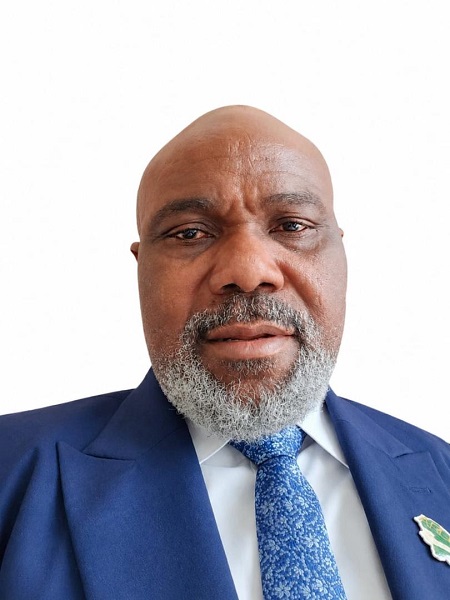
-Kunle Odusola-Stevenson
Africa Energy Week (AEW) 2026 in Cape Town has sharpened a question that should now dominate the continent’s energy policy and investment agenda: how can Africa convert its vast hydrocarbon resources into energy security, industrial capacity, competitive businesses and sustainable economic prosperity?
The message from the continent’s energy leaders was clear. Resources alone do not create prosperity. Their value depends on the capital invested to develop them, the infrastructure that connects them to markets, the industries built around them and the policies that make projects commercially viable. For investors, financiers, governments and energy companies, Africa’s opportunity is substantial. But unlocking it will require a more disciplined approach to project development, financing, regional integration and execution.
One of the most consequential figures emerging from AEW 2026 was the projection by Abderrezak Benyoucef, OPEC’s Head of Energy Studies, that Africa will require at least US$125 billion in refining investment through 2050. The estimate underscores the scale of the challenge facing a continent that produces crude oil but still depends heavily on imported refined petroleum products in many markets. It also signals the scale of the commercial opportunity for investors prepared to support viable refining capacity, modernisation, maintenance, storage, logistics and associated infrastructure.
The case for investment is not simply about constructing more refineries. It is about building competitive, reliable and commercially sustainable refining systems. New capacity must be supported by dependable crude supply, efficient operations, access to working capital, robust distribution networks and markets capable of absorbing output. Refinery projects must be assessed against realistic feedstock economics, product demand, financing costs, technology requirements and the competitive pressures of international trade. Without these fundamentals, additional capacity could become an expensive asset rather than a durable engine of industrial growth.
The broader outlook presented by OPEC Secretary-General Haitham Al Ghais reinforced why Africa cannot afford to approach its energy future through a narrow lens. In a recorded keynote prepared for AEW 2026, Al Ghais highlighted the continent’s substantial oil and gas resources, rising energy demand and demographic expansion. OPEC’s outlook projects African energy demand to rise from approximately 17.5 million barrels of oil equivalent per day in 2025 to 29.3 million by 2050, while oil demand is projected to increase from 4.3 million barrels per day to 9.2 million barrels per day over the same period. He stressed that all forms of energy will be necessary and called for greater access to finance for energy solutions suited to individual countries’ circumstances.
That argument has direct implications for investment strategy. Africa needs to expand access to reliable and affordable energy while building the productive capacity that converts energy into jobs, exports and industrial output. Oil and gas development, electricity generation, gas processing, renewables, transmission networks, storage and energy-efficient technologies should not be treated as mutually exclusive priorities. The task is to develop an integrated system that reflects each country’s resources, infrastructure, fiscal capacity and economic needs.
The urgency is particularly evident in the relationship between energy access and industrialisation. Businesses cannot compete where power is unreliable, logistics are expensive or essential inputs are exposed to persistent supply disruptions. Manufacturers need predictable energy costs. Refiners need secure feedstock and access to markets. Investors need credible regulation and a reasonable prospect of returns. Governments, in turn, need projects that expand productive capacity, generate public revenue and create skilled employment. Connecting these requirements is the real work of energy policy.
The African Petroleum Producers’ Organization (APPO) brought this question into sharper focus through the message of its Secretary-General, Farid Ghezali. His call was not merely for Africa to produce more energy, but to retain more of the economic value generated by its resources. As he put it, “Africa must invest more in its energy. Africa must retain more value from its energy. And Africa must use its energy to build the industries, the jobs and the prosperity of tomorrow.”
That is a strategic proposition with significant consequences for how African energy projects are structured. Exporting raw materials may generate revenue, but processing, manufacturing, engineering, shipping, storage, technology services and specialised finance can deepen the economic benefits. A refinery, for example, should be understood not as an isolated industrial facility but as part of a wider value chain linking crude producers, pipeline operators, ports, shipping companies, insurers, banks, traders, petrochemical producers and manufacturers. The greater the strength of those connections, the greater the opportunity to retain expertise, employment and commercial value within African economies.
Realising this ambition will require more than policy declarations. Capital must be matched with projects that are properly structured, technically credible and commercially bankable. Governments need predictable regulatory frameworks, transparent licensing processes and payment systems that support investment. Project sponsors must demonstrate credible business models and competent execution. Financial institutions need to develop financing structures suited to the risks and timelines of energy infrastructure. Development finance institutions and regional banks can help mobilise capital, but they cannot substitute for sound project fundamentals or consistent policy implementation.
Regional integration is equally important. Fragmented markets, inadequate cross-border infrastructure and inconsistent regulatory systems increase costs and limit the scale at which energy businesses can operate. Stronger regional trade in petroleum products, gas, electricity and technical services could help improve supply security, widen markets and make infrastructure investments more attractive. Cooperation among national oil companies and other industry institutions, including initiatives advanced during AEW, will matter most when it leads to practical commercial partnerships, interoperable systems and projects that progress from discussion to implementation.
For Nigeria, these themes are particularly relevant. Its refining expansion, substantial gas resources, established upstream industry and large domestic market offer an important foundation for a broader industrial strategy. Yet the opportunity will depend on reliable crude supply arrangements, efficient infrastructure, competitive financing, stable and transparent regulation, and the development of markets that can sustain investment. Refining capacity alone will not guarantee energy security. The objective must be to create a connected and competitive energy economy in which upstream production supports domestic processing, gas enables industrial activity, logistics facilitate distribution and local companies participate meaningfully across the value chain.
This is also the strategic context for the Nigeria International Energy Summit (NIES) 2027, scheduled for 15–18 March 2027 in Abuja under the theme, “Energy Sovereignty in Action: Driving Investment, Industrialization and Security.” The summit provides an opportunity to carry the investment and policy questions sharpened in Cape Town into a more focused engagement between government, energy producers, financiers, technology providers and industrial players. Its value will lie not simply in convening senior participants, but in encouraging practical dialogue around bankable projects, investment conditions, infrastructure gaps, supply security and the partnerships required to advance them.
For investors, the central question is not whether Africa possesses energy resources. It is whether individual markets can translate those resources into projects that deliver credible returns while supporting broader economic development. For governments, the challenge is to create the conditions in which private capital can participate responsibly and productively. For African energy companies, the opportunity is to move further into processing, services, technology and industrial activity rather than remain confined to the supply of raw materials.
AEW 2026 has put the scale of the opportunity into perspective: OPEC’s US$125 billion refining investment estimate illustrates the capital required, while APPO’s call to invest more and retain more value articulates the economic ambition. The next phase must connect these two imperatives through credible projects, stronger regional markets and sustained execution.
Africa’s energy future will not be secured by resource ownership alone. It will be built by the quality of its investment decisions, the competitiveness of its infrastructure, the strength of its institutions and its ability to turn energy into productive economic activity. The challenge now is to make that transition commercially real.
Kunle Odusola-Stevenson is CEO, The Legend and Legacy Company Ltd/ Conference Producer, Nigeria International Energy Summit (NIES)
Comment here