
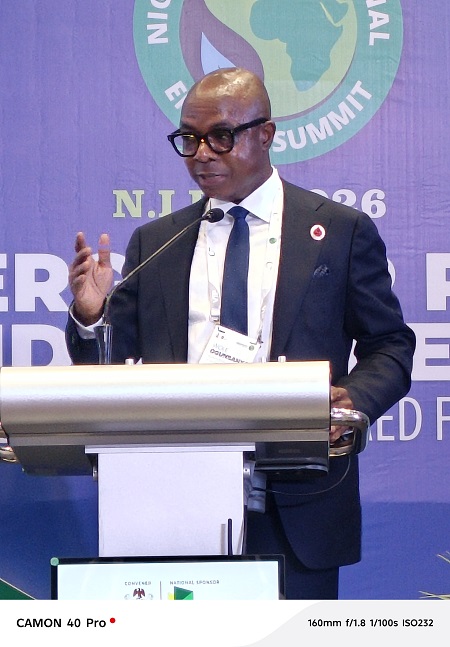
Engr. Wole Ogunsaya, Chairman of PETAN
…Seeks $6bn Investment in Equipment to Boost Nigeria’s Oil Production to 3 Million Barrels Daily
…Urges oil producers to adopt equipment financing scheme for indigenous service companies
-Felix Douglas
The Petroleum Technology Association of Nigeria (PETAN) has called for increased investment in oil and gas equipment, estimating that about $6 billion is required to strengthen the country’s production capacity and support the Federal Government’s target of producing three million barrels of crude oil per day by 2030.
PETAN said Nigeria’s oil and gas industry has significant growth potential, given its substantial hydrocarbon reserves, expanding domestic refining capacity and demand for petroleum products. However, inadequate equipment, limited access to finance and insufficient investment in exploration and production infrastructure remain major obstacles to achieving the country’s production ambitions.
Speaking on the state of the Nigerian oil and gas industry to journalists in Lagos, PETAN Chairman, Engr. Wole Ogunsanya said the country needed to bridge the gap between its available resources and the infrastructure required to produce, process and transport crude oil and gas efficiently.
According to Engr. Ogunsayan, Nigeria currently produces approximately 1.7 million barrels of oil daily, while its potential refining capacity could reach about three million barrels per day if existing and planned projects become fully operational.
He identified the Dangote Refinery, with an installed capacity of 650,000 barrels per day, alongside the Nigerian National Petroleum Company Limited’s refineries in Kaduna, Warri and Port Harcourt, as part of the country’s refining infrastructure.
He also cited plans by the BUA Group to develop a 350,000-barrel-per-day refinery and Dangote Refinery’s proposed capacity expansion, noting that the growing domestic refining industry would increase demand for crude oil.
The PETAN Chairman, however, cautioned that refining capacity alone would not guarantee energy security without sufficient crude oil production, functional infrastructure and investment in oilfield equipment.
He said Nigeria’s historical production peak of approximately 2.6 million barrels per day highlighted the need to expand production facilities, maintain existing assets and invest in new equipment.
The speaker also noted that Nigeria’s crude oil reserves, estimated at about 38 billion barrels, underscored the need to intensify exploration and replenish reserves after years of limited exploration activity.
He stressed further that the country must adopt a more strategic and consistent approach to oil and gas production rather than allow fluctuations in international crude prices to dictate investment decisions.
According to him, sustained drilling and investment during periods of low oil prices would position Nigeria to increase production more rapidly when market conditions improve.
He cited oil-producing countries in the Middle East as examples of jurisdictions that continue investing in their oilfields during market downturns, often negotiating lower service costs to improve project economics.
PETAN Highlights Financing as Major Constraint
Engr. Ogunsanya identified access to finance as one of the most significant challenges confronting indigenous oil and gas service companies, particularly those seeking to acquire expensive equipment needed to support increased production.
He said land drilling rigs could cost between $30 million and $40 million, while more complex offshore drilling equipment could require investments running into hundreds of millions of dollars.
To address the funding gap, Ogunsanay disclosed that PETAN had estimated the industry would require approximately $6 billion in equipment and hardware to support Nigeria’s ambition of producing three million barrels of oil daily.
He explained that much of the equipment needed to achieve the target was either unavailable locally, outdated or no longer suitable for current operational requirements.
The speaker said indigenous service companies had increasingly reinvested profits into their businesses, with some established operators building the financial capacity to acquire equipment. However, he stressed that broader financing mechanisms were necessary to accelerate industry-wide investment.
He also cited a financing arrangement involving Renaissance Africa Energy Company Limited and 13 banks, which he said was designed to provide up to $4 billion in financing for equipment and services.
Under the arrangement, companies with contracts from participating oil producers could use the expected contract proceeds to support bank financing for equipment purchases.
He explained that the model would enable service companies to acquire equipment, execute contracts and repay loans from revenue generated through their operations, reducing their dependence on conventional collateral-based lending.
Engr. Ogunsanya urged other oil-producing companies, including Seplat Energy and other operators, to consider adopting similar arrangements to expand access to equipment financing for indigenous service providers.
He said such initiatives would strengthen local capacity, reduce funding constraints and ensure that Nigerian companies could respond more effectively to growing demand for oilfield services.
Local Content Policy Drives Indigenous Capacity
The PETAN Chairman attributed the growth of indigenous oil and gas service companies partly to Nigeria’s local content framework, which has encouraged greater participation by Nigerian businesses across the petroleum value chain.
He recalled that PETAN had advocated policies designed to ensure that Nigerians retained a greater share of the economic benefits generated by the country’s oil and gas resources.
He particularly highlighted provisions of the Nigerian Oil and Gas Industry Content Development Act, 2010, which he said supported consideration of indigenous companies during the divestment of oil and gas assets.
According to him, the emergence and growth of indigenous operators such as Seplat Energy, Renaissance Africa Energy Company Limited, Heritage Energy Operational Services and Aradel Holdings demonstrate the long-term impact of policies promoting Nigerian participation in the sector.
He added that local companies had developed capabilities across several oilfield service segments, enabling them to compete with international providers and deliver services at competitive costs.
Engr. Ogunsanya disclosed that some services provided by Nigerian companies were now less expensive than comparable services in countries such as Ghana, Congo and Angola.
He cited the construction of a pipeline across the River Niger by an indigenous service company as an example of the technical expertise developed locally.
He maintained that sustained implementation of local content policies would strengthen the domestic supply chain, create employment opportunities and retain more value within the Nigerian economy.
NCDMB Fund Should Prioritise Oilfield Equipment
The PETAN Chairman called on the Nigerian Content Development and Monitoring Board (NCDMB) to channel more resources from the Nigerian Content Development Fund towards acquiring equipment that would directly support oil and gas production.
He noted that the fund receives contributions equivalent to one per cent of relevant contracts in the Nigerian oil and gas industry and has supported projects aimed at building domestic industrial capacity.
While acknowledging the board’s contributions to industrial and gas infrastructure projects, he urged it to give greater priority to equipment acquisition that could help close production gaps and improve operational efficiency.
He said targeted investment through the fund could complement commercial bank financing and other industry-led initiatives, providing indigenous companies with additional resources to expand their operations.
The PETAN Chairman was of the view that collaboration among indigenous service providers, oil producers, financial institutions and government agencies would be essential to mobilising the capital required to meet Nigeria’s production targets.
He added that sustained investment in equipment, technology, skills development and local expertise would help transform the country’s oil and gas potential into higher production, stronger energy security and broader economic benefits.
He stressed that Nigeria’s growing refining capacity and domestic demand for petroleum products made it increasingly important to maintain reliable crude oil production and develop the infrastructure needed to support the entire petroleum value chain.
Comment here