
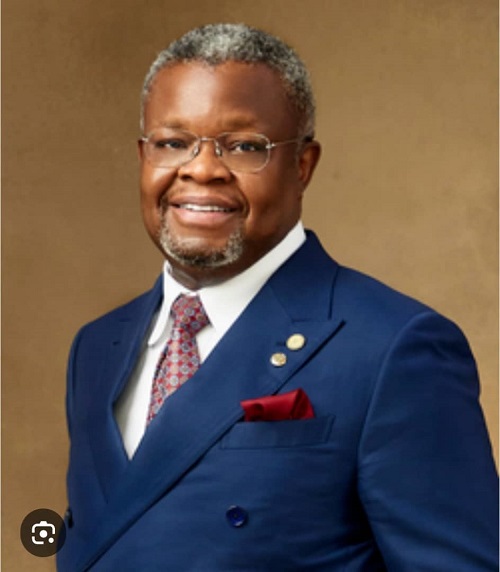
Dr. Daere Akobo, Chairman of PANA Holdings
By Olaoye Samuel
The Making of PANA Holdings
For many entrepreneurs, building a successful company is the ultimate goal. For Dr. Daere Akobo, however, the success of PE Energy marked the beginning of a much broader ambition. By the second decade of the twenty-first century, the global energy industry was evolving at a pace few had anticipated. Digital technologies were transforming field operations, investors were paying closer attention to environmental performance, governments were introducing ambitious decarbonisation policies, and the distinction between traditional energy companies and technology-driven industrial enterprises was becoming increasingly blurred.
These developments posed fundamental questions for indigenous service companies across Africa. Would they remain largely dependent on conventional oilfield contracts, or would they evolve into diversified organisations capable of serving a rapidly changing energy economy? Akobo’s response was to look beyond the traditional boundaries of oilfield services.
Having demonstrated that an indigenous engineering company could compete successfully in Nigeria’s oil and gas industry, he set out to create a business platform capable of replicating that success across multiple sectors. From this vision emerged PANA Holdings, the strategic umbrella under which his expanding portfolio of businesses would be integrated and positioned for continental growth.
A Powerhouse of Excellence
Conceived as a holding company bringing together businesses operating across engineering, technology, infrastructure, manufacturing and energy solutions, PANA Holdings has grown to encompass oil and gas, mining, power, process industries, industrial real estate and agriculture. Its vision of becoming “a reference point of unmatched enterprise standards” signals a deliberate effort to build an integrated industrial ecosystem capable of supporting Nigeria’s long-term economic development while responding to emerging trends within the global energy landscape. Its operational values make it clear that the philosophy underpinning the group is that sustainable value is created not merely by extracting natural resources, but by developing the industries, technologies and human capabilities that surround them.
This perspective distinguishes Akobo from entrepreneurs whose fortunes are tied primarily to commodity cycles. While acknowledging that crude oil and natural gas will remain central to Africa’s development for decades to come, he has consistently argued that the continent’s future prosperity will depend just as much on innovation, industrialisation and knowledge-based enterprises.
In many respects, this thinking aligns with the changing priorities of the country’s energy sector. Although crude oil continues to provide a substantial share of government revenue and foreign exchange earnings, policymakers increasingly recognise the need to diversify the economy, deepen domestic value addition and reduce dependence on imported technologies. The petroleum industry is therefore expected to serve not simply as a source of fiscal revenue, but as a catalyst for broader industrial development.
For Akobo, achieving that objective requires companies willing to invest beyond immediate commercial returns. Under the PANA Holdings umbrella, investments increasingly reflect an appreciation of the interconnected nature of modern industry. Engineering services, energy optimisation, digital technologies, infrastructure development and industrial solutions are viewed not as separate business lines but as complementary capabilities capable of delivering integrated value to clients operating in increasingly complex environments.
This integrated approach also reflects the evolution of the international energy industry itself. Across the world, major energy companies have expanded their focus beyond exploration and production to embrace digital transformation, carbon management, infrastructure, advanced engineering and renewable energy technologies. Indigenous African companies seeking long-term relevance must inevitably adapt to these same realities.
Leading the Energy Revolution
Dr Akobo has frequently argued that Africa should avoid approaching the global energy transition as a binary choice between hydrocarbons and renewable energy. Instead, he advocates a pragmatic pathway that reflects the continent’s developmental priorities. With nearly 600 million Africans still lacking access to electricity, according to the International Energy Agency (IEA), energy security remains an urgent development imperative. For countries such as Nigeria, endowed with abundant natural gas reserves alongside significant renewable energy potential, the challenge lies in balancing climate commitments with the pressing need to expand affordable and reliable access to energy. Added to this are transmission constraints and longstanding weaknesses in power sector planning that continue to hinder commercial viability across the electricity value chain.
It is within this context that PANA Holdings, through PE Energy, leverages its team of highly trained field-service engineers and the extensive technical expertise of its original equipment manufacturer (OEM) partners to deliver cost-effective solutions to captive and grid-connected power producers, as well as transmission and distribution companies. PE Energy supplies new gas and steam turbine units, genuine replacement parts, and comprehensive maintenance services for gas and steam turbines, helping clients improve operational efficiency and system reliability.
Additionally, Akobo has consistently championed natural gas as a strategic bridge fuel. Nigeria possesses more than 200 trillion cubic feet of proven natural gas reserves (the largest on the African continent) yet much of this resource remains underutilised. Successive governments have sought to accelerate domestic gas utilisation through initiatives such as the Decade of Gas programme, recognising its potential to support power generation, industrialisation, fertiliser production, petrochemicals and cleaner transportation.
Akobo has publicly supported these efforts, describing natural gas not simply as another petroleum commodity but as an enabler of industrial development. Harnessing Nigeria’s gas resources more effectively, he argues, could strengthen manufacturing, improve electricity supply and create new opportunities for indigenous businesses across multiple sectors of the economy. Consistent with this vision, PE Energy recently unveiled its Multiphase Pump System technology, designed to curb gas flaring while boosting oil production in Nigeria.
At the same time, Dr Akobo has emphasised that the energy transition should not be viewed solely through an environmental lens. For Africa, he contends, the transition must also address questions of economic inclusion, technology transfer and industrial competitiveness. Without deliberate investment in local innovation and manufacturing capacity, there is a real risk that the continent could replace one form of dependency with another, importing clean energy technologies much as it once depended heavily on imported oilfield expertise.
These observations resonate with wider debates taking place across Africa’s energy landscape. Industry leaders increasingly advocate what has come to be known as a “just energy transition”- one that recognises Africa’s comparatively modest contribution to global greenhouse gas emissions while acknowledging its legitimate need for economic growth, industrialisation and expanded access to energy.
Akobo’s business philosophy reflects this balanced perspective. Rather than advocating the premature abandonment of hydrocarbons, he believes the revenues and technical capabilities generated by the oil and gas sector should be harnessed to finance broader industrial transformation. In this way, petroleum resources become not an end in themselves but a platform for building diversified economies capable of competing successfully in a lower-carbon future.
Promoting Digital Technologies and Solutions
Technology occupies a central place in Dr Akobo’s vision for PANA Holdings. One of its portfolio companies, AKD Consulting, is rapidly expanding its international footprint and building a reputation as a leading player in key digital technologies for the extractive industries, including oil, gas and mining. The company harnesses geological and geophysical data to help clients make informed strategic decisions across the exploration and production value chain.
AKD Consulting’s offerings include the deployment of its proprietary Stress Field Detector (SFD®) technology for airborne data acquisition, processing, interpretation and integration, alongside seismic data acquisition and interpretation, basin evaluation, geoscience data management, petroleum economics and deep prospectivity studies. These capabilities enable clients to reduce uncertainty, improve decision-making and maximise the value of their exploration investments.
This aligns with the Fourth Industrial Revolution, which is reshaping virtually every aspect of the global energy business. Artificial intelligence is transforming reservoir modelling and predictive maintenance. Digital twins allow operators to simulate equipment performance and anticipate failures before they occur. Drones inspect pipelines more safely and efficiently than conventional methods, while advanced data analytics help optimise production, improve operational efficiency and reduce costs.
For indigenous companies, embracing these technologies is no longer optional. Akobo has repeatedly emphasised that future competitiveness will depend less on access to natural resources than on the ability to deploy knowledge, innovation and digital solutions effectively. Speaking at the 2025 Sub-Saharan Africa International Petroleum Exhibition and Conference (SAIPEC), he stressed the importance of digital technologies in driving innovation, operational efficiency and sustainability across the industry. He argued that by harnessing the power of digitalisation, companies could optimise their operations, reduce costs and strengthen their competitiveness in the global marketplace. He further warned that organisations which fail to invest in capacity building, research, technological capability and continuous learning risk becoming increasingly marginalised as efficiency and innovation emerge as the industry’s defining competitive advantages.
Implications for National Development
This emphasis on innovation and efficiency extends beyond corporate strategy to broader questions of national development. At industry events, Akobo has consistently advocated stronger collaboration among government, universities, research institutions and the private sector. Nigeria’s universities continue to produce thousands of engineering graduates each year, yet many leave school with limited exposure to modern industrial technologies. Bridging this gap, he argues, requires sustained partnerships capable of translating academic knowledge into practical industrial competence.
The issue has become even more pressing as the industry confronts demographic change. Many of the experienced professionals who helped build Nigeria’s petroleum sector during its formative decades are approaching retirement, while a considerable number of younger engineers continue to pursue opportunities abroad. Preserving institutional knowledge while developing the next generation of technical leaders has therefore become one of the defining challenges facing the industry.
Akobo regards mentorship as an indispensable part of the solution. Throughout his career, he has maintained that lasting corporate success should be measured not only by financial performance but also by the quality of leaders an organisation produces. Businesses that fail to develop people, he believes, rarely sustain excellence beyond the tenure of their founders. He has consistently maintained that mentorship plays a vital role in shaping the destinies of individuals, organisations and societies. That conviction has increasingly informed his engagement with young professionals, entrepreneurs and industry associations, where he continues to champion leadership founded on competence, integrity and a commitment to continuous improvement.
Ultimately, for younger engineers, entrepreneurs and business leaders, Dr Akobo’s achievements demonstrate that globally respected enterprises can be built on Nigerian foundations. For policymakers, they highlight the importance of sustained investment in indigenous capacity, technological innovation and industrial development. And for the wider petroleum industry, they serve as a reminder that Nigeria’s greatest competitive advantage may ultimately lie not beneath the ground, but in the ingenuity, sagacity and altruistic enterprise of the people who transform its natural resources into lasting national value.
Olaoye Samuel writes from Lagos (07033179360)
Comment here