
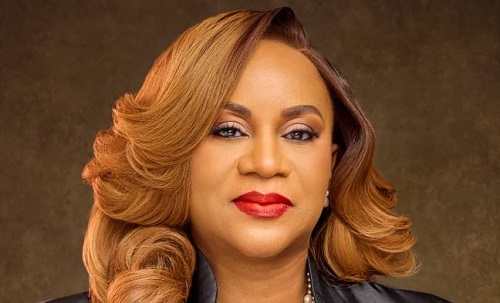
Audrey Joe-Ezigbo, Chief Executive Officer of Falcon Corporation Limited, one of Nigeria’s leading indigenous gas companies, has advocated directing subsidies towards infrastructure that lowers LPG delivery costs, alongside coordinated government–private sector action to support sustained household adoption in Nigeria.
Speaking during a panel session on government-led LPG interventions at the 16th NLCGA Conference & Exhibition in Abuja, the CEO highlighted the importance of cylinder distribution while emphasising the supporting investment, purchasing power and awareness needed to help families continue using cooking gas.
“We should subsidise access, not consumption. That means funding the infrastructure that lowers delivery costs, such as inland depots, bottling plants and better logistics, rather than the price. Some of these incentives already exist, and we need more of them” she said.
Audrey Joe-Ezigbo explained that transport contributes significantly to what consumers in the North pay for LPG. She cautioned that subsidising the molecule itself could discourage the investment needed to expand access.
“We should avoid subsidising the molecule itself, because that discourages the investment needed to expand LPG use. Beyond our terminals, trucking and logistics, rail and pipelines will be essential to push LPG across Nigeria, and they require significant capital.” She said.
Alongside infrastructure development, she called for efforts to improve household purchasing power and communicate LPG’s benefits, particularly for health. Her recommendations positioned cylinder provision within a broader effort to make adoption affordable, safe and supported by reliable supply.
The CEO proposed sustained adoption as a central measure of programme success: whether households reached through an intervention can still refill their cylinders independently, at prevailing market prices, 24 to 36 months after support ends. She recommended tracking refills per household and programme, with quarterly publication of the data to inform implementation and investment planning.
To encourage private-sector participation, Audrey Joe-Ezigbo identified guaranteed supply, volume certainty and predictable regulation as priorities. She called for an enforceable domestic LPG supply obligation and proposed translating households reached through the Grassroots Programme into credible demand supported by performance-based offtake contracts linked to verified refills.
Recognising the benefits of multiple initiatives aimed at deepening LPG penetration, the CEO advocated a coordinated national delivery framework, central data platform and public scorecard. These would bring together information on demand, supply, refills, storage and distribution investment, reach and lives saved.
“Government-led initiatives provide valuable opportunities to deepen LPG penetration. Building on these efforts through a coordinated national framework, a shared data platform and a public scorecard would help investors and industry stakeholders identify where they can contribute most effectively. This approach would strengthen continuity, improve progress tracking and align existing programmes around a common national agenda.”
Concluding, the CEO emphasised that reaching the five million tonne goal will depend on a shared effort between the collaboration between government and the private sector. Backing the assets that make LPG available and affordable, she noted, would give Nigerian households a dependable alternative to firewood and bring fewer deaths from smoke inhalation within reach. Falcon Corporation Limited, she affirmed, stands ready to partner with government, fellow operators and industry bodies in delivering that outcome.
Comment here