
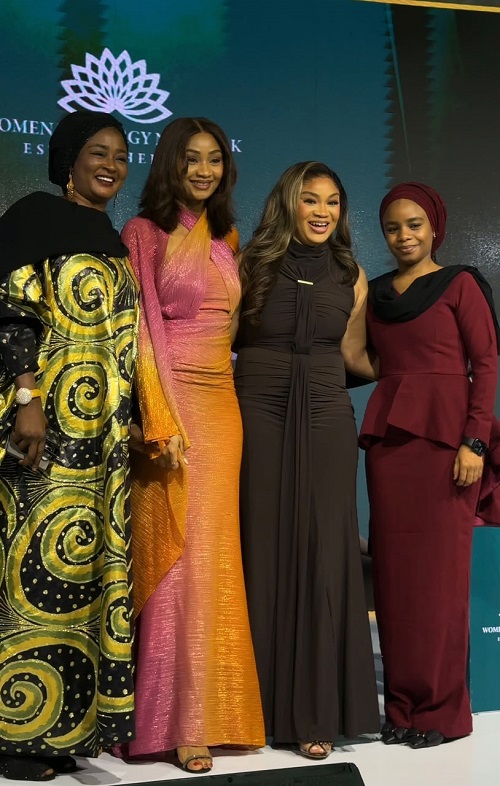
L-R: Nafisa Sambo Bashari, Group Head oil & gas, Bank of Industry, Thelma Chukwu, Managing Director Telmek Global resources, Bassey Adie, Managing Director, Loyz marine Services and Rabia Wanka, Senior manager Specialized business department, Nexim bank
Bank of Industry announces financing product in partnership with Renaissance to support businesses facing traditional collateral challenges
Women entrepreneurs and financial industry leaders have called for the removal of systemic barriers limiting the participation and growth of women-owned businesses in Nigeria’s energy sector, particularly in accessing contracts, establishing credibility and securing financing.
The call was made during a fireside chat on Local Content and Access to Finance at the Women in Energy Network (WIEN) Gala & Awards Night 2026, held in Lagos. The event brought together senior executives, industry leaders, policymakers, financial institutions and other stakeholders committed to advancing women’s participation and leadership across Nigeria’s energy value chain.
The session was moderated by Bassey Adie, Managing Director and Chief Executive Officer of Loyz Marine Services Limited, and featured Thelma Chukwu, Managing Director and Chief Executive Officer of Telmek Global Resources; Mrs. Nafisa Bashari, Divisional Head of Extractive Industries at the Bank of Industry; and Rabia Wanka, Manager, Strategic Alliance and Partnership at the Nigerian Export-Import Bank (NEXIM).
A central theme of the discussion was the difficulty women entrepreneurs face in establishing credibility and gaining the confidence of prospective clients in an industry traditionally dominated by established operators.
The speakers highlighted that one of the greatest challenges for emerging businesses is not necessarily the ability to deliver quality services, but securing the initial opportunities required to demonstrate their capabilities.
Women-owned businesses frequently find themselves competing against companies that have operated for decades, developed extensive industry relationships and established strong track records.
For emerging entrepreneurs, this creates a difficult cycle in which businesses are expected to demonstrate experience and capacity before being given the opportunities necessary to build them.
Drawing from her experience of over nine years building Telmek Global Resources, Ms. Thelma Chukwu emphasised that credibility, capacity and trust are built over time. She shared insights from her entrepreneurial journey, highlighting the persistence, consistency and commitment required to earn clients’ confidence, establish a track record and progressively grow a business in Nigeria’s highly competitive energy industry.
Access to finance emerged as another significant challenge confronting women-owned businesses in the energy sector.
The capital-intensive nature of the industry means that even businesses that successfully secure contracts often struggle to mobilise the financing required for equipment, personnel, logistics and project execution.
The speakers highlighted the limitations of traditional lending structures that place significant emphasis on physical collateral, particularly for emerging businesses that may have secured credible contracts but do not yet possess substantial assets.
The discussion called for greater adoption of contract-backed financing models that assess the strength of the underlying contract, the credibility of the contracting entity and the commercial viability of the transaction, rather than relying predominantly on the business owner’s existing asset base.
Responding to these concerns, Mrs. Nafisa Bashari announced that the Bank of Industry has developed a financing product in partnership with Renaissance Africa Energy Company Limited, aimed at supporting businesses and transactions that may not meet conventional collateral or bank guarantee requirements.
She explained that the initiative represents an important step towards developing more accessible financing solutions for businesses operating within the energy sector.
The announcement was particularly significant given the longstanding financing constraints faced by emerging indigenous operators seeking to execute contracts awarded by established energy companies.
Beyond financing, the fireside chat examined structural challenges within the contracting and procurement processes that can unintentionally exclude emerging women-owned businesses from meaningful participation.
A key concern raised was the increasing emphasis on asset ownership as a prerequisite for contract eligibility, even in circumstances where businesses possess the technical competence, commercial relationships and operational capabilities required to deliver services through structured partnerships.
The discussion questioned the inconsistency between such requirements and the historical approach adopted in developing indigenous capacity within Nigeria’s oil and gas industry.
Guided partnerships, strategic alliances and technical collaborations have historically played an important role in enabling indigenous companies to acquire experience, develop capabilities and progressively build their asset bases.
These approaches were instrumental in advancing the objectives of the Nigerian Content Development and Monitoring Board (NCDMB) and strengthening local participation across the industry.
The speakers therefore emphasised the importance of ensuring that emerging women-owned businesses are afforded similar opportunities to develop capacity through structured partnerships, rather than being excluded at the qualification stage because they do not already possess the assets they are seeking opportunities to acquire.
The discussion reinforced the need for procurement and local content frameworks that distinguish between genuine technical incapacity and the absence of asset ownership, while maintaining appropriate standards for safety, competence and service delivery.
The discussion echoed a powerful message delivered earlier in the evening by keynote speaker Mr. Mutiu Sunmonu, who emphasised the importance of fairness in creating opportunities for women within the energy industry.
He stated futher:
“Women are not asking for standards to be removed, but for them to be applied fairly. Remove the systemic barriers so opportunities can be accessible to women.”
His remarks reinforced a central message of the evening: advancing women’s participation does not require compromising industry standards, but rather ensuring that existing systems do not unnecessarily prevent qualified and capable women-owned businesses from accessing opportunities.
The emphasis was on creating a more equitable operating environment in which competence, performance and the ability to deliver remain the principal considerations in determining access to contracts and commercial opportunities.
Speaking on the purpose of the session, Bassey Adie explained that the fireside chat was deliberately structured to encourage candid conversations about the practical realities of building businesses in Nigeria’s energy industry.
Unlike conventional industry conferences, which often focus on policy frameworks, investment opportunities and high-level sector developments, the discussion sought to examine the less visible challenges entrepreneurs encounter while attempting to establish and grow their businesses.
These included the struggle to build credibility, the difficulty of accessing initial contracts, financing constraints, restrictive qualification requirements and the broader structural challenges that can limit participation despite demonstrated competence.
The session also provided an opportunity for financial institutions and industry stakeholders to engage directly with these challenges and explore practical solutions capable of delivering measurable outcomes.
The fireside chat reinforced the need for the energy industry to move beyond conversations about gender inclusion towards deliberate actions that create sustainable commercial opportunities for women-owned businesses.
Participants highlighted the importance of strengthening access to contract-backed financing, reviewing restrictive procurement requirements, supporting structured partnerships and creating clearer pathways for emerging businesses to develop the technical and financial capacity required for long-term growth.
These priorities align with WIEN’s broader commitment to advancing women’s participation in leadership, supporting the development of young women in STEM and expanding opportunities for women-owned businesses across the energy value chain.
As Nigeria continues to strengthen indigenous participation and develop its energy industry, the message from the session was clear: meaningful inclusion must be reflected not only in representation and policy commitments, but also in access to contracts, capital, partnerships and opportunities for sustainable business growth.
Comment here