
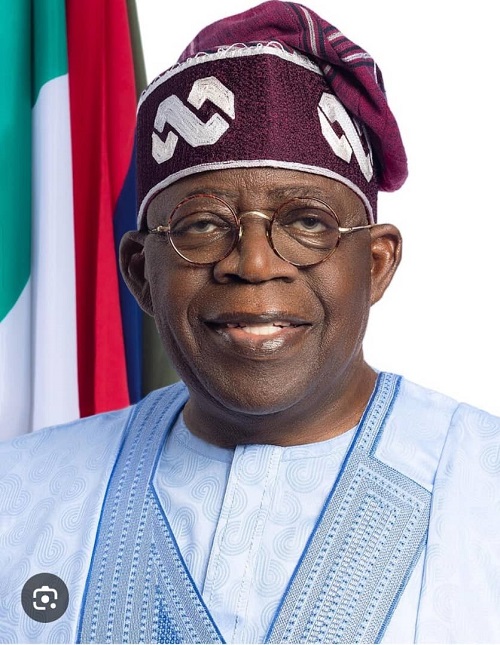
President Bola Tinubu
Three years after promising Nigerians stable electricity and an end to estimated billing, the Tinubu administration is defending its record with reforms, metering initiatives and a N4 trillion debt-settlement programme. But with electricity supply challenges persisting, the question remains whether these interventions will translate into reliable power for households and businesses.
When President Bola Ahmed Tinubu stood before members of the Organised Private Sector (OPS) in Lagos ahead of the 2023 general elections, he made a strong promise about the future of electricity in Nigeria.
He identified estimated billing, unreliable electricity supply and deep-rooted institutional problems as major obstacles confronting households, businesses and the wider economy.
His declaration was emphatic: Nigerians would have electricity and would no longer have to pay estimated bills.
“A promise made will be a promise kept,” he declared, challenging voters to hold him accountable if he failed to deliver.
Nearly three years into his administration, that promise remains one of the important benchmarks against which his government’s performance in the electricity sector is being judged.
For millions of Nigerians who continue to contend with irregular electricity supply, high energy costs and the burden of alternative power sources, the expectation is straightforward: reliable and affordable electricity.
However, the All Progressives Congress (APC) Presidential Campaign Council argues that assessing Tinubu’s performance requires looking beyond the campaign declaration to the structural reforms and financial interventions introduced since he assumed office.
In a statement issued on November 1, 2026, and signed by its spokesperson, Dele Alake, the council maintained that the President had not abandoned his commitment to transforming the power sector.
It also argued that public commentary surrounding the electricity pledge should consider the full context of Tinubu’s original statement, particularly his promise to provide Nigerians with adequate explanations if he failed to deliver before seeking a second term.
Breaking the monopoly: States enter the electricity market
One of the administration’s earliest major interventions came through the Electricity Act, 2023, which Tinubu signed into law on June 9, shortly after assuming office.
The legislation opened the door for states to establish their own electricity markets and participate more actively in electricity generation, transmission and distribution.
For a country whose electricity industry has historically operated largely within a centralised framework, the reform represents a significant shift in the structure of the market.
According to the APC council, states including Lagos, Enugu, Abia, Ekiti, Oyo, Kaduna and Niger have begun taking advantage of the legislation by establishing state electricity regulatory agencies and creating opportunities for private-sector investment.
The reform is expected to encourage competition, attract capital and allow states to develop electricity solutions that respond to their individual economic and industrial needs.
However, the success of decentralisation will ultimately depend on the ability of state governments to establish viable electricity markets, attract investors and deliver sustainable power services to consumers.
The metering challenge and the estimated billing burden
Perhaps the most direct connection between Tinubu’s campaign promise and the daily experiences of electricity consumers is the issue of estimated billing.
For years, millions of Nigerian households and businesses have complained about being charged for electricity they may not have consumed, largely because of inadequate metering infrastructure.
To address this challenge, the administration introduced the Presidential Metering Initiative, designed to close an estimated gap of more than seven million meters.
The APC council disclosed that over 1.5 million customers had been metered under the initiative in the last three years.
Although the figure represents progress, it also highlights the scale of the remaining challenge.
Closing the metering gap remains essential to improving transparency, strengthening consumer confidence and ensuring that electricity customers are billed according to actual consumption.
For consumers, the ultimate test will be whether the initiative can accelerate meter deployment and eliminate the widespread reliance on estimated billing.
N4 trillion intervention: Addressing the financial crisis
Beyond metering and electricity market restructuring, the administration has also focused on the financial challenges confronting the power sector.
The APC council said Tinubu inherited legacy debts exceeding N6 trillion, accumulated between 2015 and 2025, which had weakened the financial position of operators across the electricity value chain.
To address the liabilities, the Federal Government introduced a N4 trillion bond programme to settle verified debts owed to 21 electricity generation companies and gas suppliers.
According to the statement, the first and second tranches of the programme have raised more than N1.2 trillion towards settling the verified outstanding obligations.
The intervention is considered important because the financial difficulties of generation companies and gas suppliers have implications for electricity production, fuel availability and the overall stability of the market.
The council argued that settling the verified debts would improve confidence among investors, reduce market risks and encourage fresh investments in generation facilities.
It cited Geregu Power Plc’s recent announcement of investments in new power transformers to improve operations at its Geregu 1 Power Plant as evidence of growing confidence in the sector.
Nevertheless, the sustainability of the intervention will depend on continued improvements in market liquidity, payment discipline and the ability of operators to recover their costs.
Strengthening the national grid
Another major component of the administration’s electricity strategy is the modernisation of transmission infrastructure.
The Tinubu administration inherited the Presidential Power Initiative (PPI), originally launched under former President Muhammadu Buhari, but subsequently reviewed the existing agreement and signed an Acceleration Agreement with German partners in December 2023.
The objective was to fast-track projects aimed at expanding and strengthening Nigeria’s transmission network.
In December 2024, the Federal Executive Council approved the first batch of projects involving the upgrade of five Transmission Company of Nigeria substations in strategic electricity load centres.
The APC council said the projects were being completed and were expected to be commissioned before the end of the administration’s first term.
In June 2026, the Federal Executive Council also approved a second batch involving the construction of eight new substations and the upgrade of four existing facilities.
The council explained that electricity infrastructure projects require specialised equipment and long procurement and delivery periods, making it unrealistic to expect immediate results.
It further disclosed plans to modernise the Osogbo Grid Control Centre, which is more than 60 years old, and develop an East-West super grid.
These projects are expected to improve transmission capacity, strengthen grid operations and support electricity delivery to industrial and residential consumers.
The affordability dilemma: Cost-reflective tariffs versus consumer protection
Perhaps one of the most difficult policy decisions facing the administration is how to make electricity commercially sustainable without making it unaffordable for ordinary Nigerians.
Electricity distribution companies require sufficient revenue to maintain infrastructure, expand services and meet their financial obligations.
However, increasing tariffs in an economy where households and businesses are already under pressure presents significant social and economic challenges.
The APC council said Tinubu recognised this dilemma early in his administration and introduced service-based tariff bands to improve the financial viability of distribution companies while linking electricity charges to the quality of supply.
The approach is intended to improve cash flow within the electricity market and reduce the government’s financial burden associated with electricity subsidies.
The administration, according to the council, will continue exploring measures to strengthen the commercial structure of the sector while protecting low-income consumers.
The challenge, however, is ensuring that improved revenue for electricity operators translates into better service delivery and that consumers receive the quality of electricity for which they pay.
Renewable energy and rural electrification
Beyond the national grid, the administration has also highlighted the role of renewable energy in expanding electricity access.
The Rural Electrification Agency has connected universities, hospitals and rural communities to solar power, according to the APC statement.
Such interventions are important in addressing electricity access gaps, particularly in communities where extending conventional grid infrastructure may be expensive or technically challenging.
Solar-powered solutions can also support critical public institutions, improve healthcare delivery and provide more reliable electricity for educational facilities.
However, expanding these initiatives and ensuring their long-term maintenance will be crucial to sustaining the benefits.
The unfinished business of electricity reform
Despite the interventions highlighted by the APC, Nigeria’s electricity challenge remains a major concern for households, manufacturers, small businesses and investors.
The administration’s defence of its record underscores the distinction between introducing reforms and delivering measurable improvements in electricity services.
The Electricity Act has created opportunities for state participation. The Presidential Metering Initiative has expanded access to meters, while the N4 trillion bond programme seeks to address financial liabilities. Transmission projects are also being implemented to strengthen the national grid.
Yet, the ultimate measure of success will not simply be the number of policies introduced, debts settled or infrastructure projects approved.
It will be reflected in the consistency of electricity supply, the reduction of estimated billing, improved consumer confidence, affordable tariffs and a financially sustainable electricity market.
As Tinubu prepares to seek another presidential mandate, the electricity pledge he made in Lagos in 2023 will remain an important part of the national conversation.
The APC Presidential Campaign Council insists that he has remained committed to fulfilling that promise and will present his scorecard to Nigerians, alongside an explanation of what remains outstanding.
For electricity consumers, however, the expectation goes beyond explanations and policy announcements.
They want a power sector that works — one capable of supporting homes, industries, businesses and Nigeria’s broader economic ambitions.
Ultimately, the success of Tinubu’s electricity promise will be determined not by the reforms announced, but by the difference Nigerians can feel when they switch on their lights.
Comment here